Introduction
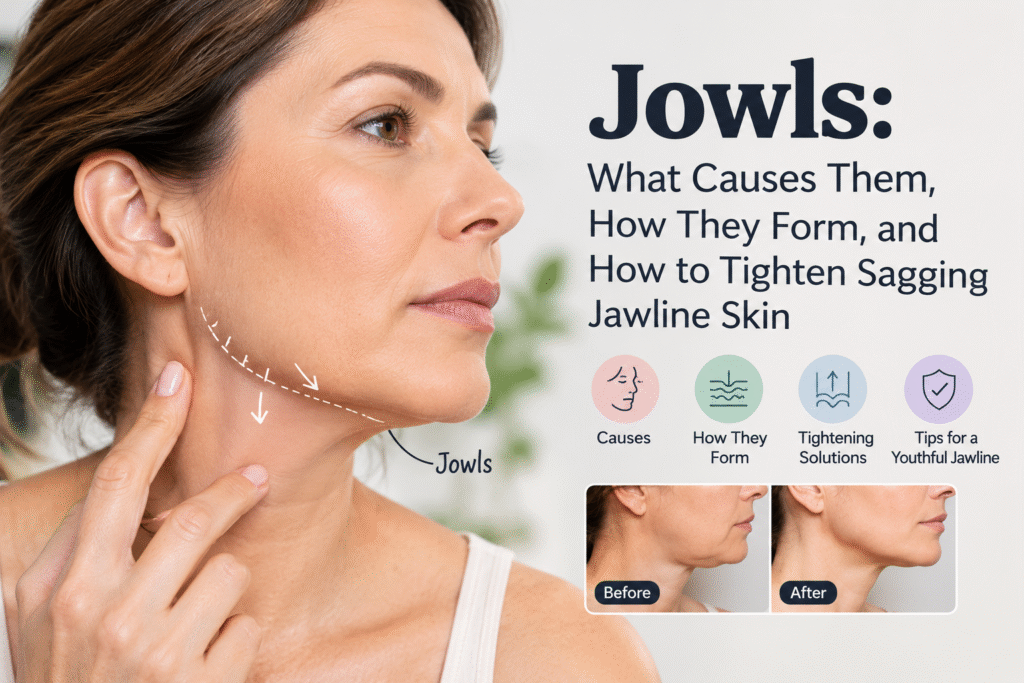
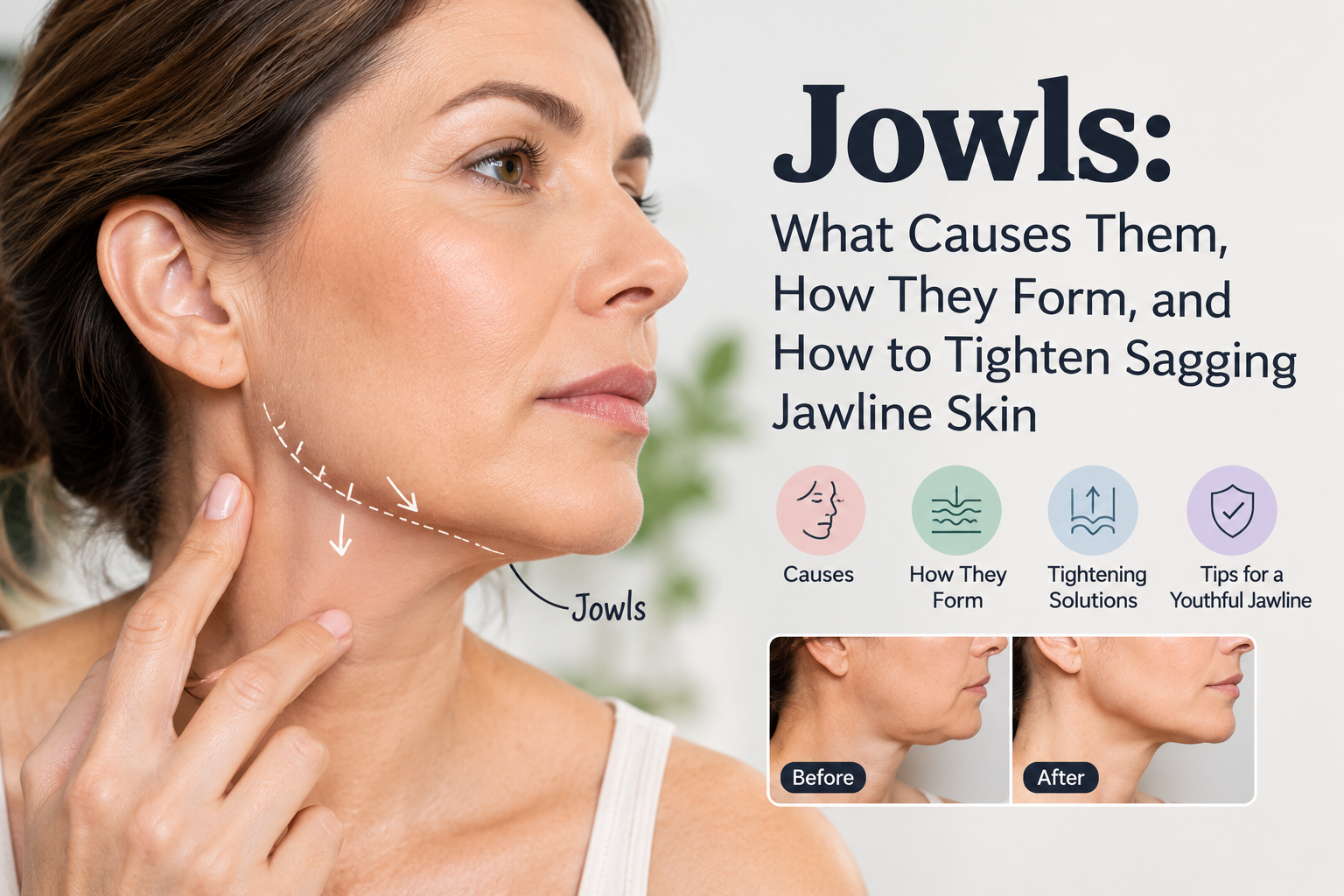
Jowls are a common facial change that appears when the skin and soft tissues around the lower face begin to lose firmness. They usually develop along the cheeks, chin, and jawline, creating a softer or less defined facial contour.
Many people associate jowls only with getting older. However, factors like genetics, weight changes, sun exposure, and lifestyle habits can influence when they appear. Some people even notice early jowls in their 20s or 30s due to inherited facial structure or changes in skin elasticity.
Understanding what causes jowls can help you make better choices for prevention and skin care. While aging cannot be stopped completely, many habits can help maintain healthier skin and support a more defined jawline appearance.
Jowls are not simply a surface skin problem. They develop from changes involving collagen, elastin, facial fat distribution, connective tissues, and the structures that support the lower face.
What Are Jowls?
Jowls are areas of loose or sagging skin that appear along the lower cheeks, jawline, and chin. They create a drooping appearance because the tissues that once supported the face become weaker over time.
In simple terms, jowls are the sagging skin below the chin and around the jawline. They can make the face look heavier and reduce the sharp definition of the lower face.
The appearance of jowls can vary between individuals. Some people develop mild skin looseness, while others notice more visible sagging caused by changes in facial volume and support.
Common signs of jowls include:
- Softer jawline definition
- Loose skin around the lower cheeks
- Drooping skin near the mouth area
- Heavier appearance around the chin
- Less visible separation between the face and neck
The development of jowls involves more than skin stretching. Aging affects deeper facial structures, including fat compartments and supporting tissues that help maintain facial shape.
Why Do Jowls Affect the Jawline Appearance?
A youthful jawline usually looks firm because skin, fat, muscles, and connective tissues work together to maintain facial structure.
Over time, several changes can happen:
- Collagen production gradually decreases.
- Elastin fibers become weaker.
- Facial fat shifts downward.
- Skin becomes less flexible.
- Supporting tissues lose strength.
These changes allow tissues around the cheeks and lower face to move downward. As a result, the jawline can appear less defined and the lower face may look fuller.
The process is part of normal facial aging, but the timing differs for everyone. Genetics, lifestyle choices, and environmental exposure can influence how quickly these changes become noticeable.
Quick Answer: What Causes Jowls?
Jowls develop because the skin and supporting structures of the lower face lose firmness over time. The main causes include aging skin, collagen loss, genetics, sun damage, weight changes, and lifestyle factors.
How Do Jowls Form? Understanding the Science Behind Sagging Jawline Skin
Jowls do not appear suddenly overnight. They develop gradually as multiple changes happen beneath the skin, including reduced elasticity, shifting facial fat, and weakening support structures.
Many people think jowls are only caused by loose skin. However, the lower face changes involve several layers, including the skin, connective tissues, fat compartments, muscles, and even facial bone structure.
As these structures lose support, the tissues around the cheeks and jawline begin moving downward. This creates the appearance of sagging skin below the chin and a softer jawline.
The Role of Collagen and Elastin Loss
Collagen and elastin are two important proteins that help maintain firm and flexible skin. Collagen provides strength, while elastin allows skin to stretch and return to its original position.
As part of normal aging skin, the body gradually produces less collagen and elastin. This reduces the skin’s ability to stay tight and resist downward movement.
When these supportive proteins decline, several changes can occur:
- Skin becomes thinner and less firm.
- Facial contours become softer.
- Loose facial skin becomes more noticeable.
- The jawline may lose its youthful definition.
Over time, reduced elasticity allows gravity to pull facial tissues downward. This contributes to the formation of droopy jowls and sagging skin around the lower face.
How Facial Fat Changes Create Jowls
Facial fat plays an important role in maintaining a youthful appearance. It provides volume and helps support the shape of the cheeks and lower face.
With age, facial fat does not simply disappear. Instead, some fat compartments lose volume while others shift downward. This redistribution can create fullness around the jawline area.
The downward movement of facial fat can lead to:
- Heavier lower cheeks
- Less visible cheek definition
- Fuller areas near the mouth
- A softer jawline appearance
This is why jowls are not only a skin issue. They are also related to changes beneath the surface of the face.
The Impact of Facial Support Structures
The face contains connective tissues and ligaments that help hold skin and fat in their natural positions. These structures provide support for the cheeks, jawline, and lower face.
As these supporting tissues weaken over time, facial tissues can gradually descend. This movement allows skin and fat to collect near the jawline, creating visible jowls.
Think of these structures like a natural support system. When that support becomes weaker, the lower face may begin to appear less lifted.
Does Bone Structure Affect Jowl Formation?
Yes, facial bone structure can influence how noticeable jowls become.
The jaw and chin provide a foundation that supports the overlying skin and soft tissues. With age, changes in facial bone volume can reduce this support and affect the lower face contour.
People with different facial structures may experience jowls differently. Some individuals naturally have stronger jawline support, while others may notice sagging earlier.
Genetics also influence:
- Jaw shape
- Skin thickness
- Facial fat distribution
- Collagen levels
This explains why some people develop early jowls while others maintain a defined jawline for longer.
Why Jowls Can Appear Earlier in Some People
Although jowls are commonly associated with aging, younger people can also experience early changes around the jawline.
Possible reasons include:
- Genetic facial structure
- Naturally thinner skin
- Lower collagen levels
- Significant weight fluctuations
- Excess sun exposure
- Lifestyle factors
Some people may notice jowls in young people during their 20s or 30s because their skin and facial structure age differently.
Having early jowls does not always mean your skin is aging rapidly. It may simply reflect your inherited facial characteristics.
Key Takeaway: Why Do Jowls Develop?
Jowls form because the lower face gradually loses its natural support system. Aging affects collagen, elastin, facial fat distribution, connective tissues, and bone structure.
The main factors behind jowl formation include:
- Aging skin and reduced collagen production
- Loss of skin elasticity
- Facial fat movement
- Genetics
- Sun damage
- Weight changes
- Lifestyle habits
Understanding these causes makes it easier to choose the right approach for jowl prevention, jawline tightening, and reducing the appearance of sagging skin.
What Causes Jowls? Main Factors Behind Sagging Jawline Skin
Jowls develop because the lower face gradually loses the support that keeps the skin firm and lifted. While aging skin is the most common reason, several other factors can influence how early or how noticeably jowls appear.
The formation of jowls usually involves a combination of changes. These include reduced collagen production, weaker elastin fibers, facial fat movement, genetics, and environmental damage.
Understanding what causes jowls can help you focus on prevention and choose suitable ways to improve the appearance of your jawline.
1. Aging Skin and Natural Collagen Loss
The most common cause of jowls is the natural aging process. As people get older, the skin gradually produces less collagen and elastin, which are essential proteins for firmness and flexibility.
Collagen acts like a structural framework that helps keep the skin supported. Elastin allows the skin to stretch and return to its original position.
When these proteins decrease, the skin becomes less resilient.
This can lead to:
- Reduced skin firmness
- Increased facial laxity
- Loose facial skin around the jawline
- More visible sagging below the chin
Over time, weaker skin support allows gravity to pull tissues downward. This creates the appearance of droopy jowls and a softer lower face.
2. Genetics and Facial Structure
Genetics can strongly influence whether someone develops jowls and how early they appear. Some people naturally have facial features that make jowling more noticeable.
Your genes can affect:
- Skin thickness
- Collagen levels
- Facial fat distribution
- Jawline shape
- Bone structure
For example, someone with naturally thinner skin or less facial support may notice early jowls sooner than someone with thicker skin and stronger jaw definition.
This is why some people ask, “Are jowls genetic?” The answer is yes. Family traits can influence your likelihood of developing them.
However, genetics are only one factor. Lifestyle habits and environmental exposure also affect how the skin ages.
3. Changes in Facial Fat Distribution
Many people think jowls happen only because skin becomes loose. However, changes in facial fat also play an important role.
Young faces usually have evenly distributed facial fat that provides volume and support. With age, some fat compartments lose volume while others shift downward.
This movement can create:
- Fuller lower cheeks
- Less cheek definition
- Heavier areas near the mouth
- A less defined jawline
The downward movement of fat near the lower face contributes to what many people describe as jowl fat.
This is why simply tightening the skin may not always fully improve jowls. The underlying facial structure also affects the final appearance.
4. Sun Damage and Photoaging
Long-term sun exposure is another major factor behind premature facial aging. Ultraviolet (UV) rays can damage collagen and elastin fibers in the skin.
When collagen breaks down faster, the skin loses its ability to stay firm.
This process, known as photoaging, may cause:
- Earlier skin sagging
- Uneven skin texture
- Reduced elasticity
- More noticeable jawline changes
People who spend years without sun protection may develop premature jowls because their skin loses structural support earlier.
Daily sunscreen use can help protect the skin from future UV-related damage.
5. Weight Loss and Facial Volume Changes
Weight changes can also affect the appearance of jowls. Rapid or significant weight loss may leave stretched skin around the face and jawline.
When facial volume decreases quickly, the skin may not immediately tighten.
This can result in:
- Loose skin under chin
- Sagging jawline
- Less facial fullness
- More visible jowl formation
However, weight loss does not always cause jowls. The result depends on factors such as age, skin elasticity, genetics, and the amount of weight lost.
6. Smoking and Lifestyle Habits
Smoking can accelerate skin aging by damaging collagen and reducing the skin’s ability to repair itself.
The chemicals in tobacco smoke affect circulation and may reduce the nutrients delivered to skin cells.
Other lifestyle factors that may contribute to faster facial aging include:
- Poor sleep quality
- Chronic stress
- Dehydration
- Poor nutrition
- Lack of sun protection
These habits may not directly create jowls alone, but they can make sagging skin more noticeable over time.
7. Hormonal Changes and Skin Aging
Hormones also influence skin quality throughout life. Changes in hormone levels can affect collagen production, hydration, and skin thickness.
For many women, hormonal changes during menopause can contribute to faster loss of skin firmness.
Lower collagen levels may make the skin:
- Thinner
- Drier
- Less elastic
- More prone to sagging
This can increase the visibility of jowls and other signs of facial aging.
8. Repetitive Facial Movements and Modern Habits
Repeated facial movements may contribute to changes in skin appearance over time. Some experts also discuss prolonged downward head positioning, sometimes called “tech neck,” as a factor affecting neck and jawline appearance.
Daily habits that may affect the lower face include:
- Looking down at phones for long periods
- Repeated facial expressions
- Poor neck posture
These factors usually do not cause jowls alone, but they may influence how the jawline looks over time.
Key Takeaway: Why Do Jowls Develop?
Jowls form because several changes happen together beneath and around the skin.
The main causes include:
- Aging skin and collagen loss
- Genetics
- Facial fat redistribution
- Sun exposure
- Weight changes
- Smoking
- Hormonal changes
- Lifestyle habits
Understanding these factors is important because jowl prevention focuses on protecting skin quality and maintaining healthy facial support before significant sagging develops.
Why Do Jowls Appear in Young People? Understanding Early Jowls and Premature Jowling
Many people believe that jowls only happen with older age. However, jowls in young people are possible and can appear earlier than expected. Some individuals notice changes in their jawline during their 20s or 30s because of genetics, facial structure, lifestyle factors, or early changes in skin support.
Seeing early jowls does not always mean your skin is aging faster than normal. In many cases, it reflects how your face is naturally built and how your skin responds to different factors over time.
The lower face depends on several structures working together. These include skin elasticity, collagen levels, facial fat distribution, connective tissues, and bone support.
When any of these factors change earlier, the jawline may appear softer or less defined.
What Are Early Jowls?
Early jowls refer to the first signs of sagging or loss of definition around the lower cheeks and jawline. These changes are usually subtle and may not look like traditional sagging skin.
Early signs can include:
- Slight softness around the jawline
- Less sharp facial contours
- Mild fullness near the mouth area
- Loose skin around the lower cheeks
- A weaker jawline appearance
At this stage, many people are not experiencing severe jowling. Instead, they are noticing early changes in facial structure and skin firmness.
Why Do Some People Get Jowls at 20 or 25?
The question “Why do I have jowls at 20?” is becoming more common as younger people notice changes around their jawline.
Several factors can contribute to premature jowling.
1. Genetics and Inherited Facial Structure
Genetics is one of the biggest reasons some people develop jowls earlier than others. Your inherited facial characteristics influence how your skin, fat, and jawline age over time.
Your genes can affect:
- Natural collagen production
- Skin thickness
- Facial fat placement
- Jaw and chin structure
- Skin elasticity
For example, someone with naturally thinner skin may notice sagging earlier. Another person with stronger jaw support may maintain a defined lower face for longer.
This explains why two people of the same age can have completely different jawline appearances.
2. Facial Shape and Jawline Structure
Your facial structure plays an important role in how visible jowls become.
The jawbone and chin provide a foundation that supports the tissues above them. If someone naturally has a smaller chin, softer jawline, or less lower-face support, early jowling may become more noticeable.
People with certain facial structures may naturally experience:
- Less jawline definition
- More visible lower-face fullness
- Earlier changes around the mouth and chin
This does not mean their face is unhealthy. It simply means facial aging patterns vary between individuals.
3. Weight Changes and Skin Stretching
Significant weight fluctuations can affect the appearance of the lower face. When the body gains weight, facial skin stretches to accommodate additional volume. After major weight loss, the skin may not always tighten completely.
This may result in:
- Loose skin under the chin
- Softer jawline contours
- More noticeable jowl fat
- Reduced facial firmness
Rapid weight changes can be especially noticeable in younger people because the face may lose volume faster than the skin can adapt.
4. Sun Damage and Premature Skin Aging
Many younger people underestimate the impact of sun exposure on facial aging.
Ultraviolet (UV) rays can damage collagen and elastin fibers. Over time, this reduces the skin’s ability to stay firm and flexible.
Repeated sun exposure without protection may contribute to:
- Early skin laxity
- Reduced elasticity
- Fine lines
- Premature jowling
Protecting your skin early can help maintain healthier facial support in the future.
5. Lifestyle Factors That May Affect Early Jowls
Daily habits can influence how quickly visible aging changes appear.
Factors that may contribute include:
- Smoking
- Poor sleep patterns
- Chronic stress
- Low-quality diet
- Inconsistent skincare
- Lack of sun protection
Smoking is particularly linked with faster skin aging because it can damage collagen and elastin.
These factors usually do not create jowls alone. However, they may accelerate changes when combined with genetic factors.
Are Jowls at a Young Age Normal?
Yes, early jowls can be normal. Facial aging does not follow the same timeline for everyone.
Some people notice changes earlier because of:
- Family history
- Facial anatomy
- Skin type
- Lifestyle choices
- Environmental exposure
Having jowls at 25 does not automatically mean something is wrong. It simply means your lower face may be showing natural variations in aging patterns.
How Can You Prevent Early Jowling?
While you cannot completely control genetics, you can support healthier skin through consistent habits.
Helpful prevention strategies include:
- Using daily sunscreen
- Maintaining stable body weight
- Eating a nutrient-rich diet
- Avoiding smoking
- Following a good skincare routine
- Protecting collagen through healthy habits
A prevention-focused approach works best when started before significant sagging appears.
Key Takeaway: Why Do Young People Get Jowls?
Premature jowls usually develop because of a combination of genetics, facial structure, skin elasticity, lifestyle factors, and changes in facial volume.
The most common reasons include:
- Genetic predisposition
- Naturally softer jawline structure
- Collagen differences
- Weight fluctuations
- Sun exposure
- Lifestyle habits
Understanding these causes helps you focus on realistic ways to maintain a healthier jawline appearance and reduce future sagging.
Signs You May Have Early Jowls: How to Know If Your Jawline Is Changing
Many people notice small changes in their lower face before obvious sagging appears. Early jowls often begin with subtle changes in the jawline rather than dramatic loose skin.
You may notice that your face looks slightly different in photos or mirrors. The jawline may appear softer, and the transition between your face and neck may become less defined.
Recognizing these early signs can help you focus on jowl prevention and maintaining healthier skin before more noticeable sagging develops.
Common Signs of Early Jowls
Early jowls can appear differently depending on your age, genetics, skin quality, and facial structure. Some people notice only mild changes, while others experience more visible lower-face sagging.
Common signs include:
- A softer jawline appearance
- Slight drooping near the lower cheeks
- Loose skin around the jawline
- Fuller areas near the corners of the mouth
- Reduced definition between the chin and neck
- A heavier appearance in the lower face
These changes often happen gradually. Many people do not notice them until comparing older photographs with recent ones.
1. Your Jawline Looks Less Defined
One of the earliest signs of jowls is a change in jawline sharpness.
A youthful jawline usually has a clear separation between the lower face and neck. As skin loses firmness, that border can become softer.
You may notice:
- Less visible jaw angles
- A rounded lower-face appearance
- Reduced facial contour
- A less sculpted profile
This does not always mean you have significant sagging. Mild changes can happen because of normal variations in skin elasticity and facial volume.
2. Loose Skin Around the Lower Cheeks
Another common sign is increased softness around the cheeks and mouth area.
As facial tissues lose support, the skin can gradually move downward toward the jawline. This creates the appearance of sagging skin below the chin and along the lower face.
You may notice:
- Small folds near the jaw
- Skin that feels less tight
- A heavier appearance around the mouth
- Mild drooping when looking sideways
These changes often indicate early skin laxity rather than advanced jowling.
3. Changes Around the Mouth Area
The area around the mouth can provide early clues about lower-face aging.
When facial support decreases, some people notice deeper lines or shadows around the mouth and lower cheeks.
Possible signs include:
- More visible folds beside the mouth
- Downward movement near the corners of the lips
- Increased heaviness around the lower cheeks
These changes happen because facial tissues are connected. When support changes in one area, nearby areas can also be affected.
4. A Softer Chin and Lower Face Appearance
A defined jawline depends on the relationship between the cheeks, chin, and neck.
When early jowls develop, the lower face may appear:
- Wider
- Rounder
- Less structured
- Less lifted
Some people describe this as a droopy chin or a loss of facial definition.
However, facial shape naturally varies. A softer jawline does not always indicate aging or a problem.
5. Your Skin Feels Less Firm Than Before
Changes in skin texture can also indicate early jowling.
As collagen and elastin levels decline, skin may become less resilient. This can make it harder for the skin to maintain its previous firmness.
You may notice:
- Reduced bounce in the skin
- More visible looseness
- Thinner-looking skin
- Less smooth texture
Maintaining good skincare habits can support overall skin quality.
How to Check If You Have Early Jowls
If you are wondering, “Do I have jowls?”, you can look for a few simple signs.
Try checking:
Side Profile Test
Look at your face from the side in natural lighting.
Notice whether:
- The jawline looks less straight
- Skin hangs slightly below the jaw
- The chin-to-neck area looks softer
Photo Comparison
Compare recent photos with older ones.
Look for:
- Changes in jawline definition
- Lower-face fullness
- Increased skin looseness
Gentle Skin Check
Lightly pinch the skin near your jawline.
Notice whether:
- The skin returns quickly
- It feels thinner
- It appears looser than before
These checks are not medical tests. They simply help you understand changes in your facial appearance.
Early Jowls vs Normal Facial Changes
Not every change around your jawline means you have significant jowls.
Normal facial changes can include:
- Slight changes in facial fullness
- Temporary water retention
- Weight-related differences
- Natural facial aging patterns
Early jowling usually involves a combination of:
- Reduced skin firmness
- Lower-face volume changes
- Loss of jawline definition
Understanding the difference helps prevent unnecessary worry.
Can Early Jowls Be Prevented?
Early jowls may be influenced by factors you cannot control, such as genetics and facial structure. However, healthy habits can support better skin quality.
Helpful prevention steps include:
- Daily sunscreen use
- Maintaining stable weight
- Using proven skincare ingredients
- Avoiding smoking
- Eating a balanced diet
- Staying hydrated
Sun protection is especially important because UV exposure can accelerate collagen breakdown and contribute to premature skin aging.
Key Takeaway: Recognizing Early Jowls
Early jowls usually appear as subtle changes rather than sudden sagging. The first signs often include a softer jawline, mild lower-face fullness, and reduced skin firmness.
Pay attention to:
- Changes in your jawline appearance
- Loose skin around the lower face
- Reduced facial definition
- Early signs of sagging skin
Identifying these changes early allows you to focus on realistic strategies for maintaining a healthier and firmer-looking jawline.
Are Jowls Reversible? Understanding What You Can and Cannot Change
Many people searching for solutions ask, “Are jowls reversible?” The answer depends on several factors, including your age, skin elasticity, the severity of sagging, and the cause behind your jowl formation.
Jowls cannot always be completely reversed, especially when there is significant skin laxity or structural aging. However, many approaches can help reduce the appearance of jowls, improve skin firmness, and create a more defined jawline appearance.
The key is understanding the difference between improving mild changes and completely removing advanced sagging. Early jowls often respond better to prevention and skin-supporting habits, while more noticeable jowls may require professional treatments.
Can Jowls Go Away Naturally?
For mild cases, natural approaches may help improve how the jawline looks. However, they usually cannot completely remove loose skin or reverse deeper facial aging changes.
Natural methods mainly support:
- Skin health
- Collagen maintenance
- Better facial muscle tone
- Overall facial appearance
Some helpful habits include:
- Protecting your skin from sunlight
- Maintaining a healthy weight
- Eating nutrient-rich foods
- Following a consistent skincare routine
- Staying physically active
These methods may slow visible aging changes, but they cannot fully restore lost collagen, facial volume, or weakened support structures.
What Determines Whether Jowls Can Be Improved?
Several factors influence how much improvement is possible.
1. The Severity of Skin Sagging
Mild jowls usually involve early skin laxity and small changes in facial contour. These cases may improve with skincare, lifestyle changes, and non-invasive treatments.
More advanced jowls involve:
- Significant loose facial skin
- Deeper folds around the mouth
- Noticeable lower-face drooping
- Reduced jawline definition
In these situations, stronger treatments may be needed for visible results.
2. Your Age and Skin Elasticity
Younger skin generally has more collagen and elasticity. This means it may respond better to preventive approaches and skin-supporting treatments.
As skin ages, collagen production decreases, making it harder for loose skin to naturally tighten. Facial aging also involves changes in fat distribution and tissue support, not only surface skin changes.
This is why two people with similar-looking jowls may require different approaches.
3. The Cause Behind Your Jowls
Not all jowls develop for the same reason.
For example:
Skin-related jowls:
- Reduced collagen
- Lower elasticity
- Sun damage
Volume-related jowls:
- Facial fat shifting downward
- Loss of cheek support
Structural jowls:
- Jawline shape
- Bone changes
- Facial anatomy
Understanding the cause helps determine the most suitable way to improve the jawline.
Can Skincare Reduce the Appearance of Jowls?
Skincare can support healthier-looking skin, but it has limitations.
Ingredients commonly used for improving skin quality include:
- Retinoids
- Vitamin C
- Peptides
- Hyaluronic acid
- Antioxidants
These ingredients may help support collagen production, hydration, and skin texture. However, skincare alone usually cannot lift significantly sagging skin or completely remove established jowls.
A consistent skincare routine is more effective for jowl prevention than reversing advanced jowling.
Can Facial Exercises Tighten Jowls?
Facial exercises are often promoted as a natural solution for jowls. They may help improve awareness and movement of facial muscles, but evidence about their ability to significantly tighten sagging skin remains limited.
Facial exercises may support:
- Muscle engagement
- Facial movement
- Overall facial wellness
However, they cannot directly rebuild lost collagen or reposition sagging facial tissues.
For realistic expectations, facial exercises should be viewed as a supportive habit rather than a guaranteed jowl treatment.
Can Weight Loss Improve or Worsen Jowls?
Weight changes can affect the appearance of the lower face.
If excess facial fullness contributes to a heavier jawline, healthy weight management may improve facial definition.
However, rapid weight loss can sometimes make jowls more noticeable because the skin may lose volume faster than it can adjust.
Factors that influence the result include:
- Age
- Skin elasticity
- Amount of weight lost
- Genetics
- Existing skin laxity
Gradual weight management is usually better for maintaining skin support.
Professional Options to Reduce Jowls
When lifestyle changes and skincare are not enough, professional treatments may help improve the appearance of sagging jowls.
Options include:
Non-Surgical Treatments
Common approaches include:
- Ultrasound skin tightening
- Radiofrequency treatments
- Dermal fillers
- Laser-based procedures
These treatments aim to improve firmness, stimulate collagen, restore volume, or redefine facial contours.
Results depend on your facial anatomy and the amount of sagging present.
Surgical Treatments
For significant jowling, surgical options may provide stronger results.
Examples include:
- Facelift
- Lower facelift
- Neck lift
These procedures can address excess skin and deeper tissue changes that non-surgical methods cannot fully correct.
A qualified professional can help determine which option matches your goals.
What Is the Best Way to Reduce Jowls?
There is no single solution that works for everyone. The best approach depends on why your jowls developed.
A balanced strategy may include:
- Daily sun protection
- Healthy lifestyle habits
- Consistent skincare
- Maintaining stable weight
- Professional treatments when appropriate
The goal is not always to completely eliminate jowls. Instead, many people focus on improving jawline appearance and reducing the visibility of sagging skin.
Key Takeaway: Are Jowls Reversible?
Jowls are not always completely reversible, especially when caused by advanced facial aging. However, their appearance can often be improved through prevention, skincare, lifestyle changes, and professional treatments.
The earlier you focus on skin health and jawline support, the more options you may have for maintaining a firmer-looking lower face.
How to Prevent Jowls and Maintain a Defined Jawline Naturally
Although aging is a natural process, certain habits can help slow visible changes around the lower face. Jowl prevention focuses on protecting collagen, maintaining skin health, and supporting the structures that keep the jawline looking firm.
You cannot completely stop facial aging or change your genetics. However, consistent care can help reduce the appearance of sagging skin and support a healthier jawline appearance over time.
The best prevention approach combines:
- Daily skincare habits
- Sun protection
- Healthy lifestyle choices
- Stable weight management
- Professional guidance when needed
1. Protect Your Skin From Sun Damage
Sun exposure is one of the biggest external factors that contributes to premature skin aging. Ultraviolet (UV) rays can break down collagen and elastin, making skin less firm over time.
When collagen support decreases, the skin may become more prone to:
- Loose facial skin
- Reduced elasticity
- Fine lines
- Sagging around the jawline
Using sunscreen every day is one of the simplest steps for preventing jowls and maintaining healthier skin.
Helpful sun protection habits include:
- Apply broad-spectrum sunscreen daily
- Choose SPF 30 or higher
- Reapply during prolonged outdoor exposure
- Protect your neck and jawline area
Many people protect their face but forget the skin below the chin. The neck and jawline also experience sun exposure and need consistent care.
2. Use Skincare Ingredients That Support Skin Firmness
A good skincare routine cannot completely remove existing jowls. However, certain ingredients may help improve skin texture and support collagen-related processes.
Important ingredients for aging skin include:
- Retinoids or retinol
- Vitamin C
- Peptides
- Hyaluronic acid
- Antioxidants
Retinoids are commonly used in anti-aging skincare because they support skin renewal and may help improve the appearance of fine lines and texture.
A simple routine may include:
Morning:
- Gentle cleanser
- Vitamin C serum
- Moisturizer
- Sunscreen
Night:
- Cleanser
- Retinol product
- Hydrating moisturizer
Consistency matters more than using many products at once.
3. Maintain a Healthy and Stable Weight
Weight changes can affect facial appearance, especially around the cheeks, chin, and jawline.
Rapid weight loss may sometimes leave loose skin because the skin needs time to adjust after losing facial volume. This can make sagging jowls appear more noticeable.
Maintaining a stable weight can help support:
- Balanced facial volume
- Skin elasticity
- A more defined jawline
Healthy weight management includes:
- Regular physical activity
- Balanced nutrition
- Adequate protein intake
- Avoiding extreme dieting
Gradual changes are usually better for maintaining skin support.
4. Eat Nutrients That Support Healthy Skin
Skin health depends partly on the nutrients your body receives. A balanced diet provides important building blocks for maintaining healthy skin function.
Include foods rich in:
- Protein
- Vitamin C
- Healthy fats
- Antioxidants
- Minerals
Examples include:
- Eggs
- Fish
- Nuts
- Seeds
- Fruits
- Vegetables
- Legumes
Vitamin C is especially important because it supports collagen formation and helps protect against environmental stress.
A healthy diet cannot prevent all facial aging. However, it supports the skin’s natural repair processes.
5. Avoid Smoking and Limit Skin-Damaging Habits
Smoking is strongly associated with faster skin aging. Tobacco exposure can damage collagen and reduce the skin’s ability to maintain firmness.
Westlake Dermatology & Cosmetic Surgery®
Smoking may contribute to:
- Earlier facial aging
- Reduced skin elasticity
- Dull skin appearance
- More visible sagging
Other habits that may affect skin quality include:
- Poor sleep
- High stress levels
- Excess alcohol consumption
- Chronic dehydration
Improving these habits supports overall skin health.
6. Keep Your Skin Hydrated
Hydrated skin often appears healthier and more flexible. While moisturizers cannot lift jowls, they can improve the skin barrier and reduce dryness.
Look for ingredients such as:
- Hyaluronic acid
- Ceramides
- Glycerin
- Peptides
A strong skin barrier helps maintain moisture and improves overall skin appearance.
Dry, damaged skin may make signs of aging look more noticeable.
7. Exercise Regularly for Overall Skin Health
Regular exercise supports circulation and overall wellness. Better circulation helps deliver oxygen and nutrients throughout the body, including the skin.
Exercise may support:
- Healthy blood flow
- Stress reduction
- Better sleep quality
- Overall skin wellness
However, exercise alone cannot tighten loose skin or completely prevent jowls.
It works best as part of a complete healthy lifestyle.
8. Practice Good Neck and Jawline Care
The skin around the neck and jawline is often overlooked. However, these areas are important for maintaining a balanced facial appearance.
Helpful habits include:
- Applying skincare products below the chin
- Using sunscreen on the neck
- Maintaining good posture
- Avoiding prolonged downward screen positions
Taking care of the entire lower face helps support a more youthful jawline appearance.
9. Consider Professional Prevention Treatments
Some people choose professional treatments before significant sagging develops.
Options may include:
- Radiofrequency skin tightening
- Ultrasound-based treatments
- Laser procedures
- Collagen-stimulating treatments
These treatments aim to improve firmness and support collagen production. Results vary depending on age, skin condition, and individual facial structure.
A consultation with a qualified professional can help determine suitable options.
Can You Completely Prevent Jowls?
No method can guarantee that jowls will never develop. Aging, genetics, and facial structure naturally influence how your face changes over time.
However, you can reduce risk factors by focusing on:
- Sun protection
- Healthy skincare
- Balanced nutrition
- Stable weight
- Avoiding smoking
- Consistent self-care
Prevention is not about stopping aging. It is about supporting healthier skin for as long as possible.
Key Takeaway: Best Ways to Prevent Jowls
The most effective jowl prevention strategy combines multiple healthy habits.
Focus on:
- Protecting collagen from UV damage
- Maintaining skin hydration
- Supporting healthy lifestyle choices
- Using evidence-based skincare ingredients
- Taking care of your jawline and neck area
Small daily habits can help maintain firmer-looking skin and support a more defined lower face over time.
How to Reduce Jowls Naturally: Home Methods and Lifestyle Approaches
Many people search for how to reduce jowls naturally because they want to improve their jawline without immediately choosing cosmetic procedures. Natural methods can support healthier skin and may improve the overall appearance of the lower face.
However, it is important to have realistic expectations. Natural approaches cannot completely remove significant sagging skin or reverse structural changes caused by aging. They mainly focus on improving skin quality, supporting collagen, and maintaining a healthier facial appearance.
The most effective natural approach combines:
- Consistent skincare
- Healthy nutrition
- Facial wellness habits
- Stable weight management
- Protection against environmental damage
Can Natural Methods Really Reduce Jowls?
Natural methods may help reduce the appearance of jowls, especially when changes are mild. They work by supporting the skin’s health rather than physically lifting loose tissues.
For example, healthy habits may help:
- Improve skin hydration
- Support collagen production
- Maintain skin elasticity
- Reduce premature aging signs
- Improve overall facial appearance
However, natural methods cannot fully tighten heavily sagging skin. Advanced jowls often involve deeper changes in facial fat, connective tissues, and skin support.
Understanding this difference helps create realistic expectations.
1. Follow a Skin-Firming Skincare Routine
A consistent skincare routine can support healthier-looking skin around the jawline. While skincare cannot create a surgical lift, certain ingredients may improve texture and firmness over time.
Useful skincare ingredients include:
- Retinol or retinoids
- Vitamin C
- Peptides
- Hyaluronic acid
- Ceramides
Retinoids are commonly used in anti-aging skincare because they help support skin renewal and collagen-related processes.
A simple routine may include:
Morning routine:
- Gentle cleanser
- Antioxidant serum
- Moisturizer
- Broad-spectrum sunscreen
Night routine:
- Cleanser
- Retinol product
- Hydrating moisturizer
Consistency is more important than using many products. A simple routine followed regularly often provides better long-term results.
2. Try Facial Exercises for Muscle Support
Facial exercises are often promoted as a way to improve jawline tightening and reduce sagging. Some people believe they help strengthen facial muscles and improve facial awareness.
Common facial exercises include:
- Chin lifts
- Neck stretches
- Jaw movements
- Cheek resistance exercises
These movements may help with muscle engagement. However, research is limited regarding their ability to significantly lift jowls or tighten loose skin.
Facial exercises cannot rebuild lost collagen or reposition sagging facial tissues. They should be viewed as a supportive habit rather than a guaranteed treatment.
3. Practice Facial Massage Techniques
Facial massage is another popular approach for improving the appearance of the lower face.
Massage may help:
- Relax facial tension
- Improve temporary puffiness
- Support circulation
- Promote a relaxing skincare routine
Some people use tools like:
- Gua sha stones
- Facial rollers
- Manual massage techniques
However, massage does not permanently remove jowls. Its benefits are usually related to temporary skin appearance and relaxation.
For best results, massage should be combined with proper skincare and healthy lifestyle habits.
4. Maintain a Collagen-Supporting Diet
Nutrition plays an important role in maintaining healthy skin. Your body needs specific nutrients to produce collagen and support normal skin function.
Foods that support skin health include:
- Citrus fruits rich in vitamin C
- Fish containing omega-3 fatty acids
- Eggs with protein
- Nuts and seeds
- Colorful vegetables
- Legumes
Important nutrients include:
Protein:
Provides amino acids needed for skin structure.
Vitamin C:
Supports collagen formation.
Healthy fats:
Help maintain skin barrier function.
A balanced diet cannot eliminate jowls, but it can support healthier aging skin.
5. Stay Hydrated for Better Skin Appearance
Hydration affects how skin looks and feels. Dehydrated skin may appear dull, less smooth, and more tired.
Drinking enough water supports overall health, while moisturizing products help maintain the skin barrier.
Hydrating skincare ingredients include:
- Hyaluronic acid
- Glycerin
- Ceramides
Well-hydrated skin often looks more flexible and healthier.
6. Maintain Good Neck and Jawline Posture
Modern habits can affect how the neck and jawline appear. Spending many hours looking downward at phones or screens may contribute to poor posture.
Good posture habits include:
- Keeping screens closer to eye level
- Relaxing neck muscles
- Maintaining a neutral head position
Posture does not directly cause jowls, but better alignment can improve the overall appearance of the neck and jawline.
7. Reduce Stress and Improve Sleep Quality
Chronic stress and poor sleep can affect overall skin health. During sleep, the body performs important repair processes that support normal skin function.
Poor sleep may contribute to:
- Dull skin appearance
- Increased signs of aging
- Reduced skin recovery
Helpful habits include:
- Maintaining a regular sleep schedule
- Managing daily stress
- Practicing relaxation techniques
Healthy lifestyle habits support better skin from the inside.
8. Protect Your Jawline From Environmental Damage
Environmental factors can accelerate visible aging changes.
Important protective steps include:
- Wearing sunscreen daily
- Avoiding excessive sun exposure
- Removing makeup before sleep
- Using gentle skincare products
UV damage is one of the major contributors to collagen breakdown. Protecting your skin early may help reduce the risk of premature jowling.
Do Jowl Exercises Remove Sagging Skin?
No, jowl exercises cannot completely remove sagging skin.
Exercises may help:
- Improve facial muscle awareness
- Support facial movement
- Encourage healthy habits
But they cannot:
- Replace lost collagen
- Remove excess skin
- Restore facial fat volume
- Change bone structure
For people with mild changes, exercises may complement a broader skincare and wellness routine.
How Long Does It Take to Improve Jowls Naturally?
Natural improvement requires patience. Skin changes happen slowly, and results depend on factors such as:
- Age
- Genetics
- Current skin condition
- Lifestyle habits
- Consistency
A realistic timeline may involve months of consistent skincare and lifestyle changes rather than quick results.
The goal should be improving skin quality and reducing the appearance of sagging, not expecting instant lifting.
Key Takeaway: Natural Ways to Reduce Jowls
Natural approaches can support a firmer-looking jawline by improving skin health and preventing further damage.
The most helpful habits include:
- Using evidence-based skincare ingredients
- Protecting skin from sunlight
- Eating a nutrient-rich diet
- Maintaining stable weight
- Staying hydrated
- Practicing healthy lifestyle habits
While natural methods cannot completely reverse advanced jowls, they can play an important role in maintaining healthier-looking skin.
Professional Jowl Treatments: Non-Surgical and Surgical Options for Sagging Jowls
When skincare and lifestyle changes are not enough, professional treatments may help improve the appearance of sagging jowls. The right option depends on several factors, including your age, skin condition, facial structure, and the amount of loose skin present.
Modern jowl treatments focus on different causes of lower-face aging. Some treatments improve skin firmness, while others restore lost volume or remove excess tissue.
A consultation with a qualified dermatologist or cosmetic professional can help identify the most suitable approach.
Understanding Jowl Treatment Options
There is no single treatment that works for every type of jowl. Different approaches target different problems.
For example:
- Loose skin may respond to skin-tightening treatments.
- Volume loss may improve with injectable treatments.
- Significant sagging may require surgical correction.
The best results often come from understanding why your jowls developed first.
Common treatment categories include:
- Non-surgical skin tightening
- Injectable treatments
- Energy-based procedures
- Surgical lifting procedures
Non-Surgical Treatments for Jowls
Non-surgical treatments are popular because they usually involve less downtime compared with surgery. They are often suitable for people with mild to moderate skin laxity.
These treatments aim to:
- Stimulate collagen production
- Improve skin firmness
- Restore facial balance
- Enhance jawline definition
However, results vary depending on the severity of sagging and individual skin response.
1. Radiofrequency Skin Tightening
Radiofrequency (RF) treatments use controlled heat energy to stimulate collagen production within the skin.
As collagen levels improve, the skin may become firmer and smoother over time.
RF treatments may help with:
- Mild sagging jowls
- Loose skin around the jawline
- Reduced skin firmness
- Early signs of facial aging
Common examples include:
- Thermage
- Morpheus8
- Other RF-based devices
These treatments are generally better suited for people who have mild to moderate skin laxity rather than significant excess skin.
2. Ultrasound Skin Tightening
Ultrasound-based treatments use focused energy to target deeper layers of the skin. The goal is to stimulate the body’s natural collagen response.
One well-known option is:
- Ultherapy
Ultrasound treatments may help improve:
- Jawline definition
- Neck firmness
- Lower-face skin laxity
Results usually appear gradually because collagen remodeling takes time.
These treatments do not physically lift the face like surgery. Instead, they encourage natural tightening processes.
3. Dermal Fillers for Jowl Improvement
Dermal fillers are injectable treatments designed to restore lost facial volume. They do not directly remove jowls but may improve their appearance by supporting surrounding structures.
Fillers may help by:
- Restoring cheek volume
- Improving facial balance
- Supporting the lower face
- Creating a sharper jawline appearance
For some people, volume restoration can reduce the shadowing that makes jowls more noticeable.
However, fillers are not ideal for everyone. Too much product can create an unnatural appearance, so proper assessment is important.
4. Laser Treatments for Skin Quality
Laser treatments can improve certain signs of facial aging by supporting skin renewal.
Depending on the treatment type, lasers may help improve:
- Skin texture
- Fine lines
- Sun damage
- Overall skin quality
Better skin quality can make the lower face appear healthier. However, lasers generally do not provide a major lift for advanced jowls.
5. Injectable Skin Treatments
Some injectable treatments focus on improving skin quality rather than adding volume.
Examples include:
- Collagen-stimulating injectables
- Skin rejuvenation treatments
- Certain biostimulatory products
These treatments aim to encourage collagen production and improve firmness gradually.
Results depend on:
- Product used
- Treatment area
- Skin condition
- Individual response
Surgical Treatments for Advanced Jowls
For people with significant sagging skin, surgical options may provide more noticeable and longer-lasting results.
Surgery addresses deeper changes that non-surgical treatments cannot fully correct.
These procedures may target:
- Excess skin
- Loose facial tissues
- Neck laxity
- Lower-face contour changes
1. Lower Facelift
A lower facelift is designed to improve sagging around the cheeks, jawline, and lower face.
During this procedure, surgeons typically reposition deeper facial tissues and remove excess skin.
A lower facelift may improve:
- Drooping jowls
- Sagging jawline
- Loose facial skin
- Loss of lower-face definition
This option is usually considered when non-surgical treatments cannot achieve the desired improvement.
2. Neck Lift
A neck lift focuses on loose skin and tissues around the neck and jawline area.
It may help improve:
- Loose skin under chin
- Neck laxity
- Jawline-neck transition
- Sagging appearance
Some people combine a neck lift with a facelift for more complete lower-face rejuvenation.
3. Facelift Surgery
A traditional facelift addresses broader signs of facial aging. It can improve sagging caused by changes in skin, tissues, and facial support structures.
A facelift may address:
- Deep facial sagging
- Advanced jowling
- Loose skin
- Lower-face aging changes
Because surgery is more invasive, it requires careful consideration and consultation with a qualified surgeon.
How to Choose the Right Jowl Treatment
The best treatment depends on your specific concerns.
Consider:
Mild Jowls
Possible options:
- Skincare
- Sunscreen
- Retinoids
- RF treatments
- Ultrasound tightening
Moderate Jowls
Possible options:
- Combination treatments
- Injectable procedures
- Energy-based treatments
Severe Jowls
Possible options:
- Lower facelift
- Neck lift
- Surgical correction
A personalized approach usually provides more natural-looking results.
Are Jowl Treatments Permanent?
The longevity of results depends on the treatment type.
Non-surgical treatments may require maintenance because the aging process continues.
Factors affecting results include:
- Age
- Lifestyle
- Sun exposure
- Genetics
- Skincare habits
Surgical procedures generally provide longer-lasting changes, but they do not stop future aging.
What Is the Best Treatment for Sagging Jowls?
The best treatment depends on what is causing your jowls.
For early changes, prevention and skin-supporting treatments may be enough.
For moderate sagging, professional tightening procedures may help improve firmness.
For advanced jowls, surgical options often provide the strongest improvement.
The goal should always be a balanced result that improves the jawline appearance while maintaining natural facial features.
Key Takeaway: Treating Sagging Jowls
Professional jowl treatments range from non-invasive procedures to surgical options. Each approach targets different aspects of facial aging, including loose skin, collagen loss, and changes in facial structure.
The right choice depends on:
- Severity of jowls
- Skin elasticity
- Age
- Personal goals
- Professional evaluation
A combination of healthy habits, skincare, and appropriate treatments can help maintain a firmer and more defined lower face.
How to Tighten Loose Skin Around the Jawline: Tips for a Firmer Lower Face
Loose skin around the jawline is one of the most common concerns associated with facial aging. As collagen levels decrease and facial tissues lose support, the lower face may appear softer or less defined.
Many people search for how to tighten jawline skin because they want to restore a sharper facial contour without changing their natural appearance.
The truth is that jawline tightening requires a realistic approach. Skincare, lifestyle habits, and professional treatments can support firmer-looking skin, but results depend on factors like age, genetics, and the amount of skin laxity.
A healthy approach focuses on:
- Supporting collagen production
- Improving skin quality
- Protecting facial structure
- Reducing factors that accelerate aging
Why Does Skin Around the Jawline Become Loose?
The jawline changes because several aging processes happen together. The skin does not simply become loose on its own.
Changes may involve:
- Reduced collagen production
- Lower elastin levels
- Facial fat redistribution
- Weakened connective tissues
- Changes in facial bone support
These changes can create:
- Sagging jawline appearance
- Loose skin under chin
- Less defined facial contours
- Early signs of jowling
Understanding these causes helps you choose methods that target the actual reason behind the changes.
1. Use Collagen-Supporting Skincare Ingredients
A consistent skincare routine can help maintain healthier-looking skin. While creams cannot physically lift sagging tissues, they can improve texture and support skin function.
Important ingredients for improving skin appearance include:
Retinoids and Retinol
Retinoids are among the most studied skincare ingredients for signs of aging. They support skin renewal and may help improve the appearance of fine lines and uneven texture.
Benefits may include:
- Smoother skin texture
- Improved firmness appearance
- Better overall skin quality
Retinol works gradually, so consistent use is important.
Vitamin C
Vitamin C is an antioxidant that helps protect skin from environmental stress. It also plays a role in normal collagen formation.
It may help:
- Brighten skin tone
- Support collagen processes
- Protect against free radical damage
Using vitamin C during the daytime with sunscreen can support long-term skin health.
Peptides and Hydrating Ingredients
Peptides are commonly included in anti-aging products because they support skin conditioning.
Hydrating ingredients like:
- Hyaluronic acid
- Ceramides
- Glycerin
help maintain the skin barrier and improve the appearance of dryness.
Healthy, hydrated skin often looks smoother and more resilient.
2. Strengthen Your Skincare Routine for the Neck and Jawline
Many people focus only on their face and ignore the lower face area. However, the neck and jawline also experience aging changes.
Extend your skincare routine to:
- Lower cheeks
- Jawline
- Chin area
- Neck
Important steps include:
Morning:
- Cleanser
- Antioxidant serum
- Moisturizer
- Sunscreen
Night:
- Cleanser
- Retinoid product
- Moisturizer
Consistent care helps maintain healthier skin around areas where sagging may develop.
3. Protect the Jawline From UV Damage
Sun exposure is one of the biggest contributors to premature skin aging. UV radiation damages collagen and elastin, which are important for maintaining skin firmness.
Without proper protection, repeated sun exposure may contribute to:
- Reduced elasticity
- Loose facial skin
- Uneven texture
- Earlier sagging
To protect your jawline:
- Apply sunscreen every day
- Cover exposed neck areas
- Avoid excessive direct sun exposure
- Reapply sunscreen outdoors
Prevention is usually easier than correcting advanced skin changes.
4. Maintain Facial Muscle and Neck Health
The muscles around the face and neck contribute to overall facial movement and posture.
Healthy habits may include:
- Gentle neck stretches
- Maintaining good posture
- Regular physical activity
- Reducing prolonged downward screen use
These habits do not directly remove jowls. However, they support overall facial wellness and posture.
A balanced posture can also improve how the jawline appears.
5. Improve Your Diet for Healthier Skin
Skin requires nutrients to maintain normal repair and renewal processes.
A skin-supporting diet should include:
Protein Sources
Protein provides amino acids needed for healthy tissues.
Examples:
- Eggs
- Fish
- Lean meats
- Beans
- Lentils
Antioxidant-Rich Foods
These help protect cells from environmental stress.
Examples:
- Berries
- Leafy greens
- Citrus fruits
- Colorful vegetables
Healthy Fats
Omega-3 fatty acids support overall skin health.
Sources include:
- Salmon
- Walnuts
- Chia seeds
- Flax seeds
Nutrition cannot completely prevent jowls, but it supports healthier aging.
6. Avoid Habits That Accelerate Skin Sagging
Certain lifestyle factors can speed up visible facial aging.
Habits that may negatively affect skin quality include:
- Smoking
- Excessive alcohol consumption
- Poor sleep
- Chronic stress
- Inadequate sun protection
Smoking is especially damaging because it affects collagen and skin repair processes.
Replacing harmful habits with healthier routines can support long-term skin quality.
7. Consider Professional Jawline Tightening Treatments
For people wanting stronger improvement, professional treatments may provide additional support.
Options may include:
- Radiofrequency tightening
- Ultrasound treatments
- Laser procedures
- Injectable treatments
- Surgical lifting procedures
The right option depends on:
- Severity of loose skin
- Age
- Skin condition
- Personal goals
A professional evaluation can help determine the most suitable treatment.
Can You Tighten Jowls Without Surgery?
Yes, some people can improve the appearance of mild jowls without surgery.
Non-surgical approaches may include:
- Better skincare
- Sun protection
- Lifestyle improvements
- Energy-based treatments
However, significant loose skin usually requires stronger interventions.
The goal of non-surgical methods is often improvement rather than complete removal.
How Long Does It Take to Tighten Jawline Skin?
Skin improvement takes time because collagen changes happen gradually.
The timeline depends on:
- Current skin condition
- Age
- Treatment method
- Consistency
Skincare changes often require several months of regular use. Professional treatments may show results sooner but still usually improve gradually.
Patience and consistency are important for realistic results.
Key Takeaway: Tightening Loose Jawline Skin
Improving loose skin around the jawline requires a combination approach.
Helpful strategies include:
- Using collagen-supporting skincare
- Protecting skin from UV damage
- Maintaining healthy nutrition
- Avoiding skin-damaging habits
- Considering professional options when needed
While aging cannot be stopped, supporting skin health can help maintain a firmer-looking lower face and improve overall jawline appearance.
Frequently Asked Questions About Jowls
What Are Jowls?
Jowls are areas of loose or sagging skin that develop along the lower cheeks, jawline, and chin. They appear when the skin and underlying facial tissues lose firmness and support over time.
The development of jowls is often linked to:
- Reduced collagen production
- Lower skin elasticity
- Facial fat redistribution
- Genetics
- Natural facial aging
Jowls can make the lower face appear softer and reduce the definition of the jawline.
What Causes Jowls?
Jowls are caused by a combination of aging-related and lifestyle factors. The most common causes include collagen loss, reduced skin elasticity, genetics, sun exposure, and changes in facial fat distribution.
Other factors that may contribute include:
- Smoking
- Weight fluctuations
- Hormonal changes
- Poor sun protection
- Natural facial structure
The exact cause differs from person to person because facial aging is influenced by both genetics and environment.
Why Do Jowls Appear With Age?
Jowls appear with age because the skin and deeper facial structures gradually lose their ability to maintain firmness.
As people age:
- Collagen production decreases.
- Elastin fibers become weaker.
- Facial fat shifts downward.
- Skin becomes less flexible.
- Supporting tissues lose strength.
These changes allow the lower face to become heavier and less defined.
This process is a normal part of facial aging, although the timing varies between individuals.
Can Genetics Cause Jowls?
Yes, genetics can influence whether someone develops jowls and how early they appear.
Inherited factors may affect:
- Skin thickness
- Collagen levels
- Facial fat placement
- Jawline shape
- Bone structure
This explains why some people develop early jowls in their 20s or 30s, while others maintain a sharper jawline for much longer.
Your genes influence your aging pattern, but lifestyle choices can still affect your skin health.
Why Do I Have Jowls at 20?
Having jowls at 20 can happen because of genetics, facial structure, weight changes, or early loss of skin firmness.
Possible reasons include:
- Naturally softer jawline structure
- Family history of early facial aging
- Lower collagen levels
- Significant weight changes
- Sun exposure
- Lifestyle factors
Early jowls do not always mean premature aging. Sometimes they are simply part of your natural facial anatomy.
Why Do I Have Jowls at 25?
Jowls at 25 may occur because of inherited facial features, changes in facial volume, or lifestyle factors affecting skin quality.
Common reasons include:
- Genetics
- Reduced skin elasticity
- Weight fluctuations
- Excess sun exposure
- Poor skincare habits
At this age, jowls are often mild and may respond well to prevention strategies.
Are Jowls Reversible?
Jowls are not always completely reversible, especially when significant skin laxity or deeper facial changes are present.
However, their appearance can often be improved through:
- Healthy skincare habits
- Sun protection
- Lifestyle changes
- Non-surgical treatments
- Surgical procedures when appropriate
The earlier you focus on skin health, the more options you may have for maintaining a firmer jawline.
Can You Prevent Jowls?
You cannot completely prevent aging or change your genetics. However, you can reduce factors that contribute to premature jowling.
Helpful prevention habits include:
- Wearing sunscreen daily
- Maintaining a stable weight
- Eating a balanced diet
- Avoiding smoking
- Using proven skincare ingredients
- Protecting your skin from environmental damage
Consistent prevention can help support healthier-looking skin over time.
How Do You Get Rid of Jowls?
The best way to reduce jowls depends on their severity and underlying cause.
Options may include:
For Mild Jowls:
- Skincare
- Retinoids
- Sunscreen
- Healthy lifestyle habits
For Moderate Jowls:
- Radiofrequency treatments
- Ultrasound tightening
- Injectable treatments
For Advanced Jowls:
- Facelift
- Lower facelift
- Neck lift
A professional evaluation can help determine the most suitable option.
How Can I Reduce Jowls Naturally?
Natural methods may help improve the appearance of jowls but cannot completely remove loose skin.
Helpful approaches include:
- Using collagen-supporting skincare
- Eating nutrient-rich foods
- Staying hydrated
- Protecting skin from UV damage
- Maintaining healthy habits
Facial exercises and massage may support facial wellness, but they cannot replace lost collagen or lift significant sagging.
Does Weight Loss Cause Jowls?
Weight loss can sometimes make jowls more noticeable, especially after rapid or significant weight reduction.
When facial volume decreases quickly, the skin may not tighten immediately.
Factors affecting the result include:
- Age
- Skin elasticity
- Genetics
- Amount of weight lost
Gradual weight management may help support better skin adaptation.
Does Smoking Make Jowls Worse?
Yes, smoking can contribute to faster skin aging and may make sagging more noticeable.
Smoking affects the skin by:
- Damaging collagen
- Reducing circulation
- Affecting skin repair
- Increasing oxidative stress
Avoiding smoking can support healthier skin and reduce premature aging effects.
Can Skincare Tighten Sagging Jowls?
Skincare can improve skin quality, but it cannot fully lift significant sagging.
Ingredients that may support healthier-looking skin include:
- Retinol
- Vitamin C
- Peptides
- Hyaluronic acid
- Antioxidants
These ingredients help improve texture, hydration, and overall skin appearance.
For advanced jowls, professional treatments may provide stronger results.
Do Facial Exercises Remove Jowls?
Facial exercises may help with muscle awareness and facial movement, but evidence for permanently removing jowls is limited.
They cannot:
- Tighten loose skin completely
- Replace lost collagen
- Move sagging tissues upward
They can be included as part of a healthy facial wellness routine.
What Is the Best Treatment for Sagging Jowls?
The best treatment depends on your skin condition, age, and the severity of sagging.
Possible options include:
- Skin tightening treatments for mild laxity
- Injectable treatments for volume loss
- Surgery for advanced sagging
A personalized approach usually provides the most natural-looking outcome.
Final Thoughts: Understanding and Managing Jowls
Jowls are a natural part of facial aging, but many factors influence when they appear and how noticeable they become.
Understanding what causes jowls helps you make better decisions about prevention and treatment.
The most effective approach combines:
- Protecting your skin
- Maintaining healthy habits
- Supporting collagen
- Choosing suitable treatments when needed
While you cannot completely stop facial aging, you can support healthier skin and maintain a more defined jawline appearance over time.