
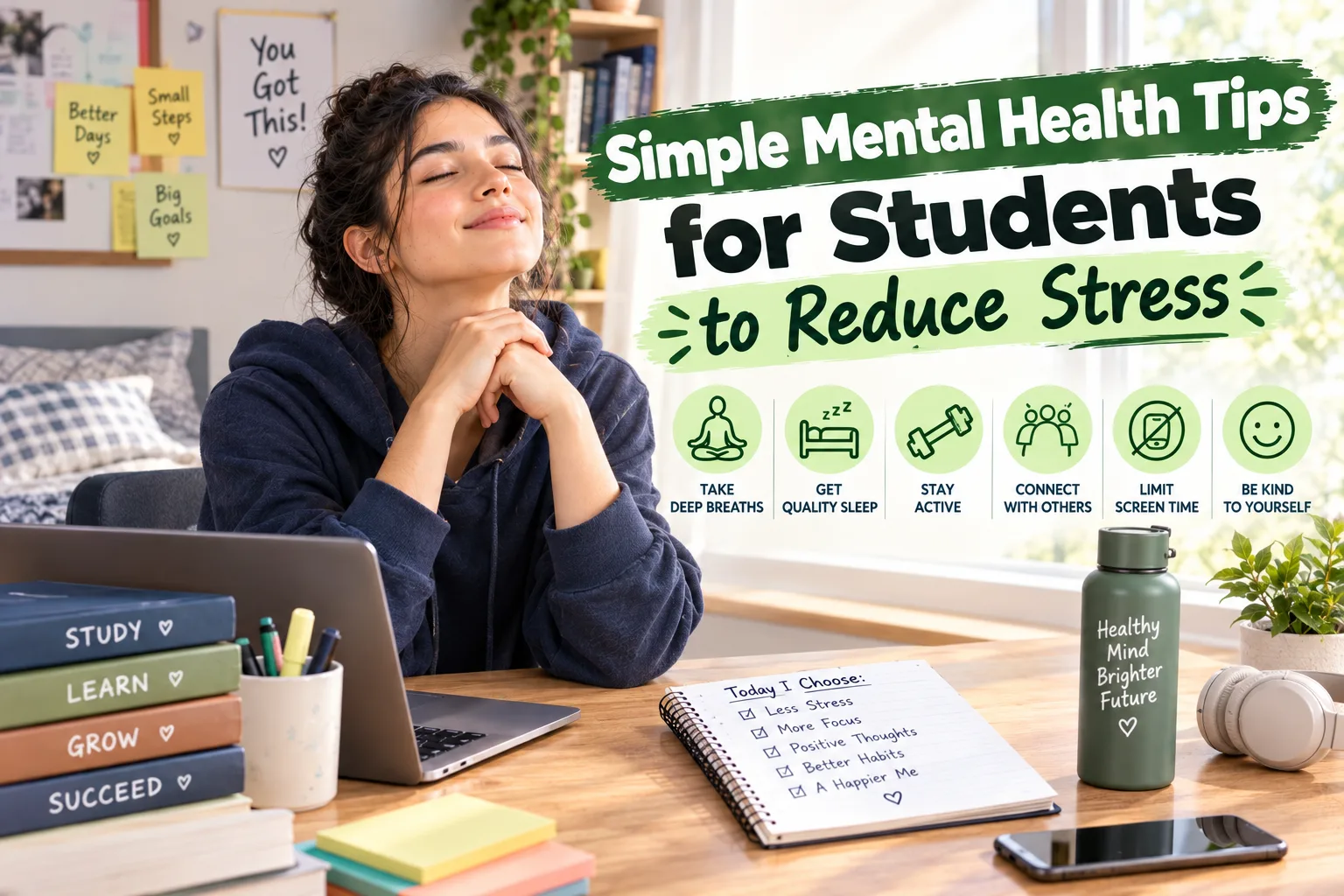
Student life can be exciting, but academic pressure, exams, assignments, social expectations, and concerns about the future can make it stressful. Learning simple mental health tips for students to reduce stress can help you manage daily challenges, improve concentration, and maintain a healthier balance between studying and personal life.
You do not need to change your entire lifestyle to protect your mental well-being. Small habits, such as getting enough sleep, organizing schoolwork, exercising regularly, and talking to someone you trust, can make everyday responsibilities feel more manageable.
The goal is not to eliminate every stressful situation. It is to develop practical ways to cope with pressure while giving your mind and body the care they need.
1. Create a Realistic Study Schedule
A busy academic schedule can feel overwhelming when multiple assignments, tests, and deadlines compete for your attention. A realistic study plan helps you prioritize responsibilities, avoid unnecessary last-minute pressure, and make time for rest.
Start by writing down your upcoming assignments, exams, and other commitments. Divide large tasks into smaller steps and assign each step a reasonable amount of time.
For example, instead of planning to complete an entire research paper in one evening, schedule separate sessions for research, outlining, writing, and editing.
Keep these tips in mind:
- Choose two or three important tasks to prioritize each day.
- Break difficult assignments into manageable sections.
- Schedule short breaks between focused study sessions.
- Leave some flexibility for unexpected tasks.
- Avoid planning every minute of your day.
A schedule should help you feel more organized, not create another source of stress. If you fall behind, adjust your plan rather than criticizing yourself for not following it perfectly.
2. Improve Sleep Quality to Manage Academic Stress
Sleep plays an important role in memory, attention, learning, and emotional regulation. Students who regularly sacrifice sleep to study may find it harder to concentrate, remember information, and manage frustration the following day.
Most teenagers need approximately eight to ten hours of sleep, while adults generally need seven to nine hours. Individual needs can vary, but consistently getting too little sleep can make academic demands feel more difficult.
Develop a regular bedtime routine by going to bed and waking up at reasonably consistent times. Reduce stimulating screen use before bed, avoid caffeine late in the day if it affects your sleep, and keep your sleeping environment as comfortable as possible.
How to Balance Studying and Sleeping
If an exam is approaching, avoid relying on all-night study sessions as your main preparation strategy. Review material in shorter sessions over several days whenever possible, and protect enough time for sleep.
You can also prepare your schoolbag, clothes, and study materials before bedtime. This small habit reduces morning decisions and may help you start the day with less pressure.
If you continue to experience significant sleep difficulties, especially alongside persistent anxiety or low mood, consider speaking with a qualified healthcare professional.
3. Use Physical Exercise to Reduce Student Stress
Physical activity is a useful way to support mental wellness during demanding academic periods. Exercise can help manage stress, support better sleep, and provide a break from studying.
You do not need to join a gym or follow an intense workout program. Walking, cycling, dancing, stretching, and beginner-friendly home workouts are practical options for students with limited time or money.
Try adding movement to your existing routine. Walk between classes when possible, stretch after a long study session, or take a short walk outdoors when you feel mentally tired.
Here are a few easy options:
- Morning: Take a brisk walk or perform gentle mobility exercises.
- Between study sessions: Stand up, stretch, or walk around for a few minutes.
- After classes: Participate in a sport or do a short home workout.
- On busy days: Choose brief movement breaks instead of skipping activity entirely.
Choose activities that feel comfortable and enjoyable. Exercise should support your well-being rather than become another academic-style target that you feel pressured to achieve.
4. Practice Mindfulness and Deep Breathing
Mindfulness helps you pay attention to the present moment instead of becoming completely absorbed in worries about grades, deadlines, or future expectations. Deep breathing and simple grounding exercises can provide a useful pause when stress begins to build.
To practice slow breathing, sit comfortably, relax your shoulders, and breathe gently through your nose. Let each breath leave your body slowly without forcing it or holding it for an uncomfortable length of time.
Continue for a minute or two while noticing the natural rhythm of your breathing. If focusing on your breath makes you uncomfortable, try a grounding exercise instead.
For example, identify five things you can see, four things you can feel, and three things you can hear. This can help redirect your attention toward your immediate surroundings.
Students can practice mindfulness before an exam, after a difficult class, or during a short break at home. It will not remove every worry, but regular practice may help you respond to stressful moments more thoughtfully.
5. Eat Balanced Meals and Stay Hydrated
Busy schedules can make it tempting to skip meals, rely heavily on caffeine, or eat whatever is available between classes. However, regular nourishment and adequate hydration support general health, energy, and concentration.
Try to include a variety of foods throughout the day, such as fruits, vegetables, whole grains, protein sources, and healthy fats. Affordable student-friendly choices may include eggs, lentils, beans, yogurt, seasonal fruit, oats, and whole-wheat bread or roti.
Keep a water bottle nearby and drink regularly, especially during hot weather or physical activity. If caffeine makes you feel restless, anxious, or unable to sleep, consider reducing your intake.
You do not need an expensive meal plan or perfect diet to support your well-being. Focus on consistent, balanced eating rather than strict food rules.
Remember that nutrition is one part of mental wellness. Food cannot guarantee relief from anxiety or other mental health difficulties, and persistent symptoms deserve appropriate attention.
6. Manage Exam Anxiety and Negative Thoughts
Exams can create pressure even when you have prepared well. Worrying about disappointing others, receiving low grades, or falling behind classmates can make it difficult to focus on the work in front of you.
One helpful approach is to separate what you can control from what you cannot. You may not control the exact questions on an exam, but you can control how you prepare, when you ask for help, and how you use your remaining study time.
When negative thoughts appear, avoid automatically treating them as facts. For example, replace “I am going to fail everything” with “I am worried about this exam, but I can review the topics I understand least.”
This does not mean pretending that problems do not exist. It means looking at them realistically and identifying a useful next step.
You can also reduce exam anxiety by completing practice questions, reviewing material in advance, and learning the exam format when that information is available. Preparation will not eliminate all nervousness, but it can make uncertainty easier to manage.
7. Maintain Healthy Social Connections
Students sometimes isolate themselves when they feel stressed because they believe they should handle every problem independently. However, talking to a supportive person can help you feel understood and identify solutions you may not have considered.
Make time to connect with friends, family members, classmates, or trusted teachers. Even a brief conversation can provide a welcome break from academic pressure.
If you are struggling with a difficult subject, consider forming a small study group. Working with others can help you exchange ideas, clarify confusing material, and feel less alone in your challenges.
Healthy connections also require boundaries. You do not have to accept every invitation, compare your grades with everyone else’s, or remain available to others when you need to rest.
Choose relationships that encourage mutual respect and support rather than constant competition.
8. Limit Social Media and Make Time for Yourself
Social media can help students stay connected, but excessive scrolling may interfere with studying, sleep, and relaxation. Comparing your grades, appearance, achievements, or social life with carefully selected online posts can also increase feelings of inadequacy.
Try turning off unnecessary notifications while studying and setting aside specific times to check your favorite apps. Keep your phone away from your immediate workspace if it repeatedly interrupts your concentration.
Equally important, make time for activities that have nothing to do with academic performance. Reading for pleasure, listening to music, cooking, drawing, playing a sport, or spending time outdoors can help you unwind.
Rest is not something you must earn by completing every possible task. A balanced student lifestyle includes learning, relationships, recreation, and recovery.
9. Know When to Ask for Mental Health Support
Self-care strategies can help with everyday stress, but they are not always enough. If anxiety, sadness, irritability, sleep problems, or loss of interest continues for several weeks or interferes with your studies and daily life, consider reaching out for professional support.
Depending on your circumstances, you may be able to contact a school counselor, university mental health service, psychologist, or another qualified healthcare professional. If approaching someone feels difficult, begin by telling a trusted adult or friend what you have been experiencing.
You do not need to wait until you reach a breaking point to ask for help. Seeking support is a responsible way to care for your health, just as you would seek assistance with a persistent physical problem.
If you feel at risk of harming yourself or cannot keep yourself safe, seek immediate help from local emergency services, a nearby emergency department, or a trusted person who can stay with you.
Build Healthier Student Habits One Step at a Time
Managing student stress does not require a perfect routine. Start with a few realistic habits, such as planning your study sessions, protecting your sleep, moving your body, eating regularly, and making time for supportive relationships.
Notice which changes help you feel more organized and emotionally balanced, then adjust your routine as your academic demands change. Some weeks will be more difficult than others, and that does not mean you have failed.
At Official Fit Sphere, a balanced approach to wellness means recognizing that physical health, emotional well-being, and academic responsibilities are connected. Give yourself permission to learn, rest, and ask for help when necessary.
Frequently Asked Questions
1. What are the best mental health tips for students during exams?
Create a realistic revision schedule, break large topics into smaller tasks, and practice with sample questions when available. Protect your sleep, eat regular meals, and take short breaks to avoid becoming mentally exhausted. If exam anxiety feels overwhelming, speak with a trusted teacher, school counselor, or healthcare professional rather than trying to manage everything alone.
2. How can students reduce stress without spending money?
Students can try free activities such as walking, gentle home workouts, deep breathing, journaling, and spending time with supportive friends or family. Organizing assignments in a notebook and limiting distracting notifications can also help. Choose a few practical strategies that fit your daily routine instead of feeling pressured to adopt every suggestion at once.
3. Can exercise help students manage academic pressure?
Yes, regular physical activity can support mood, sleep, and stress management. Walking, cycling, dancing, and simple bodyweight exercises are accessible options. Even brief movement breaks can provide a useful change of pace during long study sessions. Choose activities that suit your fitness level and health needs, and avoid treating exercise as a replacement for professional mental health care.
4. Why do students feel stressed even when they study regularly?
Stress can result from several factors, including high expectations, fear of failure, financial concerns, social pressure, inadequate sleep, or uncertainty about the future. Studying regularly may help with preparation, but it cannot remove every source of anxiety. Setting realistic goals, taking breaks, and discussing persistent worries with someone you trust may help you manage these pressures.
5. When should a student seek professional help for stress?
Consider professional support if stress, anxiety, sadness, or sleep difficulties persist, worsen, or interfere with everyday responsibilities, relationships, or academic performance. A school counselor, university mental health service, psychologist, or qualified healthcare professional can help you explore appropriate support. If you feel unable to keep yourself safe, seek immediate emergency assistance.