
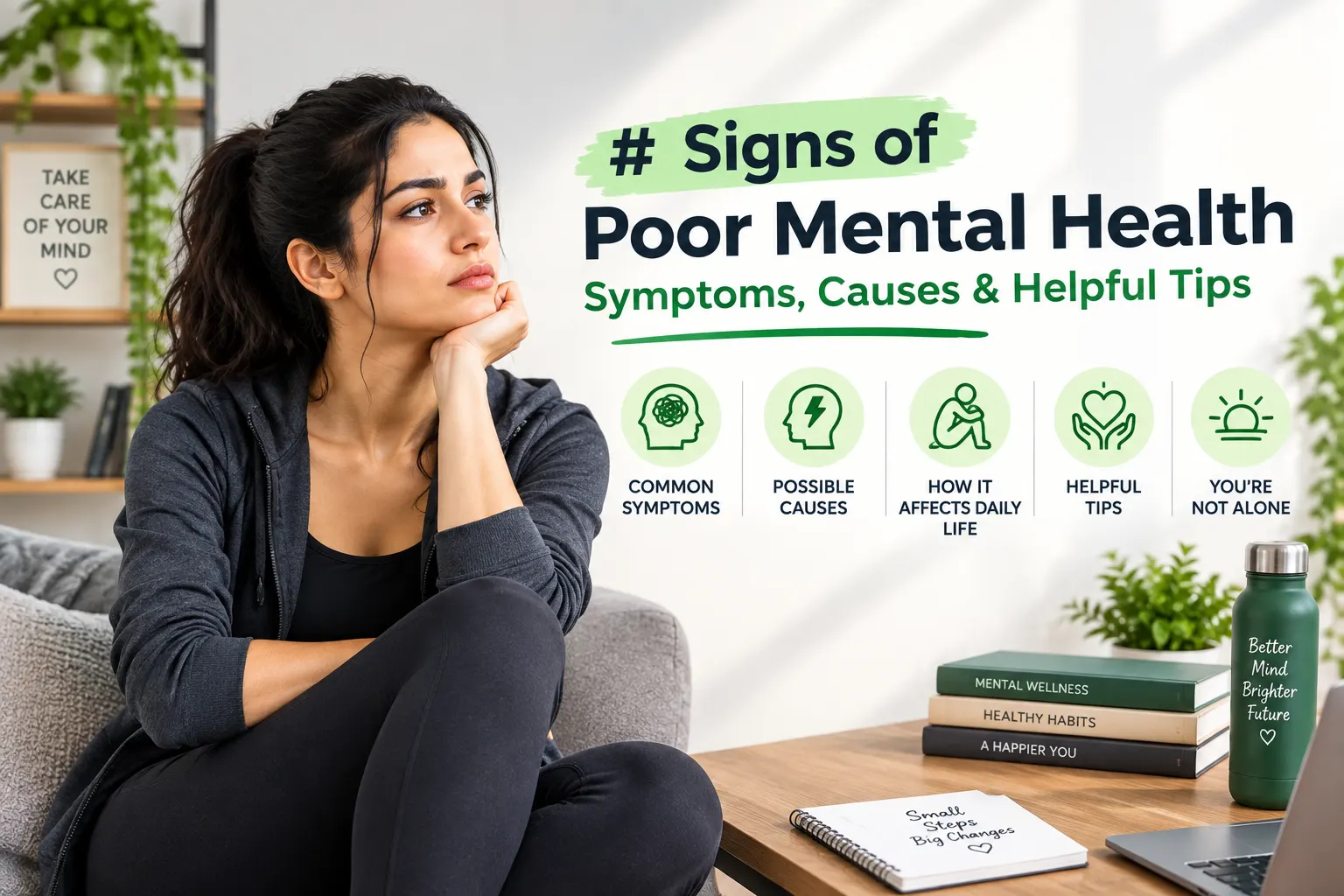
Mental health affects how we think, feel, behave, and handle everyday stress.
Everyone has difficult days. However, ongoing changes in mood, sleep, motivation, behavior, or daily activities may be signs of poor mental health.
Recognizing these signs early can help you understand when you may need extra support.
What Are the Common Signs of Poor Mental Health?
Signs of poor mental health can affect your emotions, behavior, physical wellbeing, and relationships.
Common signs include:
- Persistent sadness or low mood
- Frequent worry or anxiety
- Irritability or sudden mood changes
- Low motivation or energy
- Difficulty concentrating
- Changes in sleeping habits
- Changes in appetite
- Losing interest in favorite activities
- Avoiding friends and family
- Feeling overwhelmed by normal responsibilities
- Feeling hopeless or helpless
- Using substances to cope with difficult emotions
You do not need to experience all of these signs to be struggling with your mental wellbeing.
What matters is whether the changes continue or begin affecting your everyday life.
Emotional Symptoms of Poor Mental Health
Emotional changes are often among the earliest signs that something may not be right.
You may feel sad, anxious, frustrated, overwhelmed, or emotionally exhausted more often than usual.
Some people also experience emotional numbness.
This can make activities, relationships, and hobbies feel less interesting or meaningful.
Changes in Mood and Motivation
A noticeable drop in motivation can make everyday tasks feel difficult.
Getting out of bed, studying, working, exercising, or responding to messages may start requiring more effort.
Persistent worry can also affect concentration and relaxation.
You may find yourself thinking about problems repeatedly without feeling able to switch off.
Behavioral and Social Changes
Poor mental health can sometimes change the way a person interacts with others.
Someone who normally enjoys spending time with friends may begin avoiding social activities.
They may stop answering messages or prefer to spend most of their time alone.
Changes in behavior can also include difficulty completing normal responsibilities.
Work, school, household tasks, and personal routines may start feeling overwhelming.
How Stress Can Affect Mental Health
Long-term stress can affect both emotional and physical wellbeing.
Work pressure, academic demands, relationship problems, financial concerns, and major life changes can all contribute to emotional stress.
When stress continues for a long time, it may become harder to relax and recover.
However, stress is not the only possible factor behind mental health difficulties.
Mental wellbeing can also be influenced by biological, psychological, social, and environmental factors.
Sleep, Exercise, and Mental Wellbeing
Sleep plays an important role in overall mental wellbeing.
Poor or irregular sleep can contribute to tiredness, irritability, low concentration, and difficulty handling daily stress.
Physical activity can also support mental wellbeing.
Walking, cycling, stretching, yoga, and strength training can help create structure and provide a healthy way to spend time away from everyday pressures.
You do not need an intense workout to get started.
Even a short walk or gentle movement can be a practical first step if you have been inactive.
Exercise should support mental health care rather than replace professional treatment when significant symptoms are present.
Possible Causes of Poor Mental Health
There is usually no single reason why someone experiences poor mental health.
Different people can respond differently to similar situations.
Possible contributing factors include:
- Long-term stress
- Major life changes
- Relationship difficulties
- Loneliness
- Social isolation
- Work or academic pressure
- Financial concerns
- Poor sleep
- Traumatic experiences
- Chronic health problems
- Family or genetic factors
- Certain medications or substance use
- Lack of emotional support
Sometimes people struggle without knowing exactly why.
Not having an obvious cause does not make the problem less real or less worthy of support.
Simple Ways to Support Your Mental Health
Small daily habits can help support emotional wellbeing.
Start by creating a simple routine that includes regular sleep, balanced meals, movement, and time for relaxation.
Talking to someone you trust can also be helpful.
Sharing your feelings with a friend, family member, counselor, or another trusted person may make difficult emotions easier to manage.
Other useful habits include:
- Taking regular breaks
- Spending time outdoors
- Staying connected with supportive people
- Practicing relaxation or breathing exercises
- Setting realistic daily goals
- Making time for hobbies
- Limiting unhealthy coping habits
- Reducing unnecessary sources of stress
You do not need to change everything at once.
Choose one or two manageable habits and build from there.
When Should You Seek Professional Support?
Consider speaking with a qualified mental health professional if symptoms continue or begin interfering with everyday life.
This may include problems with work, education, relationships, sleep, or personal responsibilities.
You do not have to wait until symptoms become severe before asking for help.
A healthcare or mental health professional can help you understand what you are experiencing and discuss appropriate support options.
If you experience thoughts of suicide or self-harm, or believe you may be in immediate danger, seek urgent help from local emergency services or a crisis service in your area.
If possible, stay with someone you trust while seeking immediate support.
How to Take the First Step
Recognizing signs of poor mental health is not a weakness.
Mental wellbeing can change throughout life, and asking for support is a normal response to difficult circumstances.
Start with one manageable action.
You could talk to someone you trust, arrange an appointment with a healthcare professional, improve your sleep routine, or add gentle physical activity to your day.
Try not to solve everything at once.
Focus on the next practical step you can take.
Understanding Your Mental Health Matters
Signs of poor mental health can include persistent sadness, anxiety, low motivation, social withdrawal, sleep problems, and difficulty managing everyday responsibilities.
These symptoms can have many possible causes.
One symptom does not automatically mean that someone has a mental health condition.
Pay attention to changes that continue or interfere with your daily life.
Healthy routines, physical activity, supportive relationships, and professional help when needed can all contribute to better mental wellbeing.
Internal Link Suggestions:
- Mental Wellness → Mental wellness and healthy lifestyle guide
- Exercise for Mental Health → Exercise and emotional wellbeing guide
- Healthy Lifestyle Tips → Healthy daily habits and wellness guide
Frequently Asked Questions
What are the first signs of poor mental health?
Early signs can include persistent sadness, increased worry, irritability, low motivation, social withdrawal, sleep changes, appetite changes, and difficulty concentrating.
One symptom alone does not necessarily indicate a mental health condition. Pay attention when several changes continue over time or begin affecting your everyday activities, relationships, work, or education.
Can poor sleep affect mental health?
Yes, poor sleep can affect mood, concentration, energy, and your ability to manage daily stress.
Ongoing sleep problems may make emotional difficulties harder to manage. A consistent sleep schedule, relaxing bedtime routine, and addressing possible causes of poor sleep may help. Persistent sleep problems should be discussed with a healthcare professional.
Can exercise help with poor mental health?
Regular physical activity can support mental wellbeing and help some people manage everyday stress.
Walking, cycling, yoga, stretching, and strength training are possible options. You do not need to exercise intensely to begin. However, exercise should not replace professional mental health support when symptoms are severe or significantly affect daily life.
When should I talk to a mental health professional?
Consider professional support when symptoms continue, become difficult to manage, or interfere with your sleep, work, education, relationships, or daily responsibilities.
You do not need to wait until the situation becomes overwhelming. A qualified professional can help you understand your symptoms and identify appropriate support for your circumstances.
Is poor mental health the same for everyone?
No. Mental health difficulties can appear differently from person to person.
One person may experience anxiety and sleep problems, while another may become withdrawn, lose motivation, or experience changes in appetite and mood. Stress, physical health, personal circumstances, environment, and other factors can influence how symptoms appear.