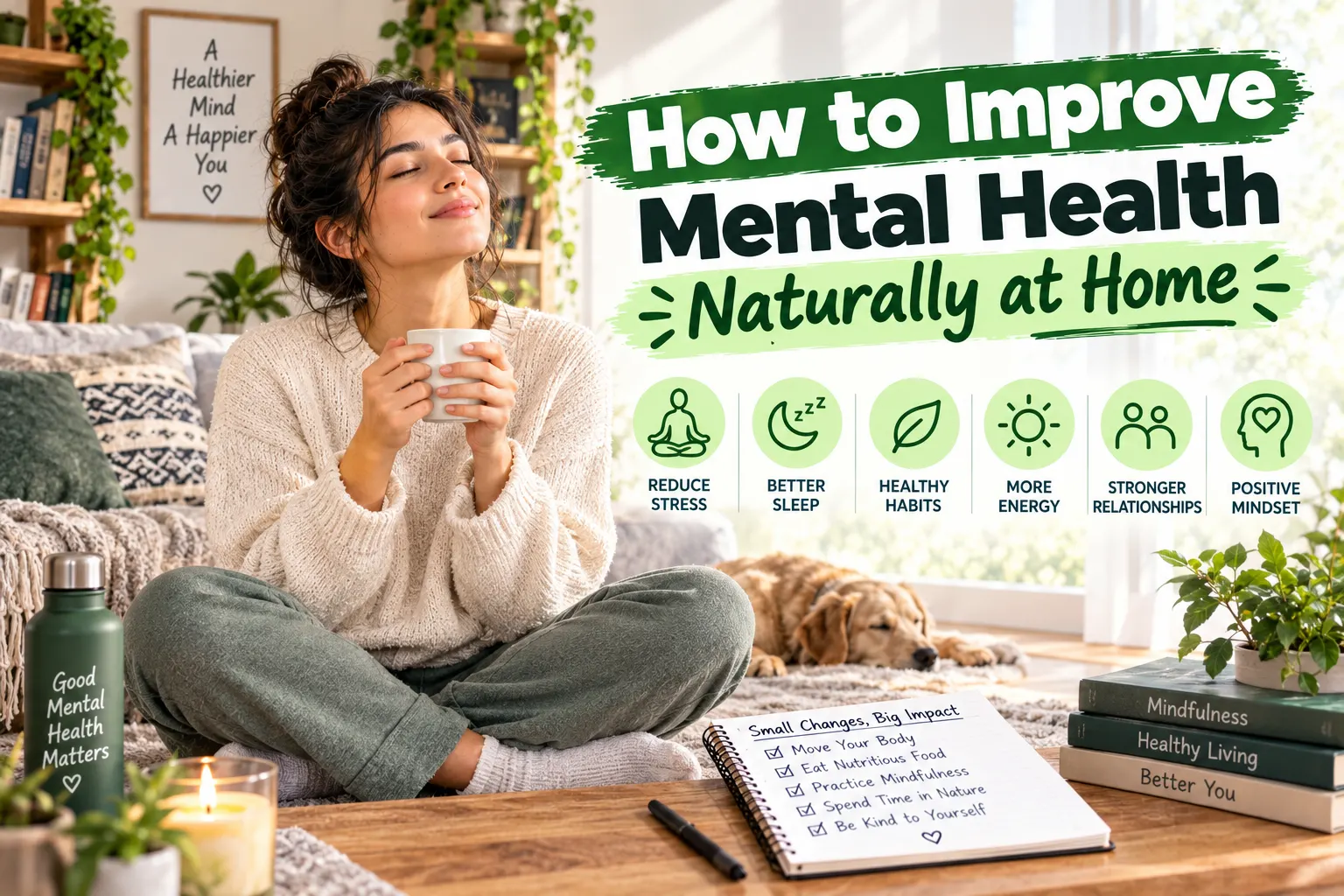
Learning how to improve mental health naturally at home can help you manage everyday stress, build emotional resilience, and create a healthier lifestyle. Simple habits such as getting enough sleep, exercising regularly, eating balanced meals, practicing mindfulness, and staying connected with loved ones can support your mental well-being without requiring major lifestyle changes.
Although these habits cannot replace professional mental health care when it is needed, they can become valuable parts of a daily self-care routine. The key is to start with manageable changes and practice them consistently.
1. Build a Healthy Daily Routine
A consistent daily routine can make life feel more organized and manageable. When sleep, meals, physical activity, and relaxation happen at reasonably predictable times, it may become easier to manage daily responsibilities and cope with stress.
Start by establishing a regular wake-up time and setting aside time for meals, work, exercise, and relaxation. You do not need to follow a strict schedule. Choose a routine that fits your responsibilities, energy levels, and personal circumstances.
Try these simple habits:
- Wake up at approximately the same time each day.
- Make time for personal care before starting work or study.
- Break large tasks into smaller, achievable steps.
- Schedule short breaks throughout the day.
- Spend a few minutes preparing for the next morning.
Avoid filling every hour with tasks. A healthy routine should leave room for rest, hobbies, and unexpected changes rather than creating additional pressure.
2. Use Physical Exercise to Support Mental Health
Regular physical activity is one of the most practical ways to support mental well-being. Exercise can help reduce feelings of stress, improve sleep, and support mood. It also provides a healthy opportunity to step away from daily worries and focus on the present moment.
You do not need an expensive gym membership or intense workout plan to get started. Walking, dancing, cycling, stretching, and beginner-friendly home workouts can all contribute to an active lifestyle.
Simple Exercises You Can Do at Home
Consider adding these activities to your day:
- Walking: Walk around your home, in your neighborhood, or in a nearby park.
- Bodyweight exercises: Try comfortable variations of squats, wall push-ups, or standing exercises.
- Stretching: Gently stretch your shoulders, back, hips, and legs after sitting for long periods.
- Yoga: Practice beginner-friendly poses and breathing exercises.
- Dancing: Play music you enjoy and move at a comfortable pace.
Start with five to ten minutes if you are new to exercise or have a busy schedule. Gradually increase your activity as your fitness and comfort improve.
The goal is not to exercise perfectly. Choose activities you enjoy enough to repeat regularly, and avoid treating exercise as punishment for eating or feeling unhappy.
3. Practice Mindfulness and Deep Breathing
Mindfulness involves paying attention to the present moment without immediately judging your thoughts or feelings. It may help you respond more calmly to stressful situations and become more aware of emotional patterns.
Deep breathing is an accessible way to begin practicing mindfulness at home. When you feel overwhelmed, sit comfortably, relax your shoulders, and breathe gently through your nose. Allow your exhalation to be slow and comfortable without forcing your breath or holding it for too long.
Try this five-minute exercise:
- Sit somewhere quiet and comfortable.
- Notice the natural rhythm of your breathing.
- Gently bring your attention back whenever your mind wanders.
- Relax your jaw, shoulders, and hands.
- Finish by noticing how you feel without expecting a particular result.
You can also try guided meditation, mindful walking, or quietly observing the sounds around you.
Meditation does not need to eliminate every negative thought to be useful. If focusing on your breathing makes you uncomfortable or more anxious, stop and try grounding techniques, such as naming objects you can see and sounds you can hear.
4. Improve Sleep Quality for Better Emotional Well-Being
Sleep and mental health are closely connected. Poor sleep can make everyday challenges feel more difficult, while stress and persistent worries can interfere with falling or staying asleep.
Most adults need approximately seven to nine hours of sleep each night, although individual needs vary. Improving your sleep habits can support emotional regulation, concentration, energy, and overall well-being.
Create a relaxing bedtime routine by reducing stimulating activities before bed and keeping your bedroom quiet, dark, and comfortable. Try to maintain consistent sleeping and waking times, including on weekends.
Additional strategies include:
- Reduce caffeine intake later in the day if it affects your sleep.
- Limit bright screens and emotionally stimulating content before bedtime.
- Get daylight exposure during the morning or early part of the day.
- Avoid heavy meals immediately before lying down if they cause discomfort.
- Use a calming activity, such as reading or gentle stretching, to wind down.
If sleep difficulties continue for several weeks, significantly affect your daily life, or occur alongside persistent mood changes, consider discussing them with a healthcare professional.
5. Eat Balanced Meals to Support Brain Health
Nutrition is another part of a healthy mental wellness routine. Your brain needs energy and nutrients to function, and regular, balanced meals can support general health, concentration, and daily energy levels.
No single food can guarantee better mental health, and diet alone cannot treat every mental health condition. However, a varied eating pattern that includes vegetables, fruits, whole grains, protein sources, and healthy fats can contribute to overall well-being.
Affordable options may include eggs, lentils, beans, yogurt, seasonal fruit, vegetables, whole-wheat roti, oats, and nuts when available.
Try to eat regularly rather than skipping meals when your schedule becomes busy. Drink water throughout the day, and notice whether excessive caffeine makes you feel restless, anxious, or unable to sleep.
Avoid strict food rules that create unnecessary stress. A sustainable approach focuses on variety, adequate nourishment, and flexibility rather than expecting every meal to be perfect.
6. Reduce Stress by Managing Your Thoughts
Everyday stress can come from work, education, finances, family responsibilities, or uncertainty about the future. Although you cannot control every situation, you can develop healthier ways to respond to stressful thoughts.
One useful strategy is journaling. Spend five to ten minutes writing about what is bothering you, what you can control, and what action might help. Putting thoughts on paper may make complicated feelings easier to examine.
You can also divide problems into two categories: things you can influence and things you cannot currently change. Focus your energy on practical next steps instead of repeatedly trying to solve situations beyond your control.
Other helpful strategies include:
- Set realistic expectations for yourself.
- Take short breaks when you feel mentally overloaded.
- Limit unnecessary multitasking.
- Reduce exposure to upsetting social media content.
- Practice saying no to commitments that exceed your capacity.
Negative thoughts are a normal part of being human. Rather than criticizing yourself for having them, try to respond with curiosity and self-compassion.
7. Strengthen Social Connections and Make Time for Enjoyable Activities
Spending time with supportive people can help reduce feelings of isolation and provide opportunities to share concerns. Meaningful connections do not require a large social circle. A conversation with a trusted friend, family member, or supportive colleague can be a useful starting point.
If meeting in person is difficult, consider a phone call or video conversation. You can also build connections through hobbies, community activities, volunteering, or groups that share your interests.
Make room for activities that give you enjoyment or a sense of accomplishment. Reading, gardening, cooking, listening to music, drawing, and spending time outdoors can provide healthy breaks from daily responsibilities.
Avoid comparing your progress with other people’s lives on social media. Online content often presents a selective picture of reality and may create unrealistic expectations.
Remember that taking time for enjoyment is not laziness. Rest and recreation are legitimate parts of a balanced lifestyle.
8. Create a Simple Mental Wellness Routine at Home
You do not need to change everything at once to support your mental health. Begin with a few habits that fit naturally into your existing schedule, then adjust them according to your needs.
A simple daily plan could look like this:
- Morning: Wake up at a consistent time, get some daylight, and eat a nourishing breakfast.
- Afternoon: Take a short walk, drink water, and pause between demanding tasks.
- Evening: Connect with someone you trust or spend time on a favorite hobby.
- Before bed: Reduce screen stimulation, prepare for the next day, and follow a calming bedtime routine.
Track how these habits affect your mood, sleep, energy, and stress over time. If a particular habit feels overwhelming, make it smaller or try another approach.
Progress may be gradual, and difficult days do not mean you have failed. Focus on consistency and flexibility rather than perfection.
When Should You Seek Professional Mental Health Support?
Natural self-care strategies can complement professional treatment, but they are not substitutes for it when symptoms are persistent or severe.
Consider speaking with a qualified mental health professional if sadness, anxiety, irritability, sleep problems, or loss of interest continues for several weeks or interferes with work, relationships, education, or everyday responsibilities.
A therapist, psychologist, psychiatrist, or other appropriately qualified healthcare professional can help you understand your symptoms and discuss suitable treatment options. You can continue using healthy routines while receiving professional support.
If you feel at risk of harming yourself or cannot keep yourself safe, contact local emergency services or seek immediate help from a trusted person and a nearby emergency department.
Support Your Mental Health With Small, Consistent Changes
Improving mental health naturally at home begins with realistic habits that support your physical and emotional well-being. Regular exercise, quality sleep, balanced nutrition, mindfulness, stress management, and meaningful social connections can all contribute to a healthier daily routine.
Start with one or two changes instead of attempting to transform your entire lifestyle overnight. Pay attention to what helps you feel more balanced, make adjustments when necessary, and seek professional support when self-care is not enough.
Mental wellness is an ongoing process, not a destination you must reach perfectly. Small, sustainable steps can help you build a more supportive relationship with yourself and your everyday life.
Frequently Asked Questions
1. How can I improve my mental health naturally at home?
Start with manageable habits, such as maintaining a regular sleep schedule, exercising, eating balanced meals, practicing mindfulness, and staying connected with supportive people. Choose one or two habits that fit your lifestyle and build gradually. These strategies can support emotional well-being, although persistent or severe symptoms may require professional mental health care.
2. What is the best natural way to reduce stress at home?
There is no single best method for everyone. Gentle exercise, slow breathing, journaling, relaxing hobbies, and taking breaks from stressful situations may help. Try different approaches to identify what works for you. If stress becomes overwhelming, persists for a long time, or interferes with daily activities, consider speaking with a qualified healthcare professional.
3. Can exercise improve mental health?
Yes, regular physical activity can support mood, sleep, stress management, and general well-being. Walking, dancing, yoga, and beginner-friendly home workouts are accessible options. You do not need intense exercise to get started. Choose an activity suited to your fitness level and health needs, and increase your activity gradually.
4. Which foods can support mental wellness?
A balanced eating pattern that includes vegetables, fruits, whole grains, protein-rich foods, and healthy fats supports overall health and provides nutrients the brain needs. Affordable choices include eggs, lentils, beans, seasonal produce, and whole grains. No individual food guarantees improved mental health, and nutrition should complement other healthy habits and appropriate treatment when needed.
5. When should I seek professional help for mental health problems?
Consider professional support if sadness, anxiety, sleep difficulties, or loss of interest persists, worsens, or interferes with daily life. You do not need to wait until symptoms become severe to ask for help. A qualified healthcare professional can assess your concerns and discuss suitable options. If you may harm yourself or cannot stay safe, seek immediate emergency assistance.