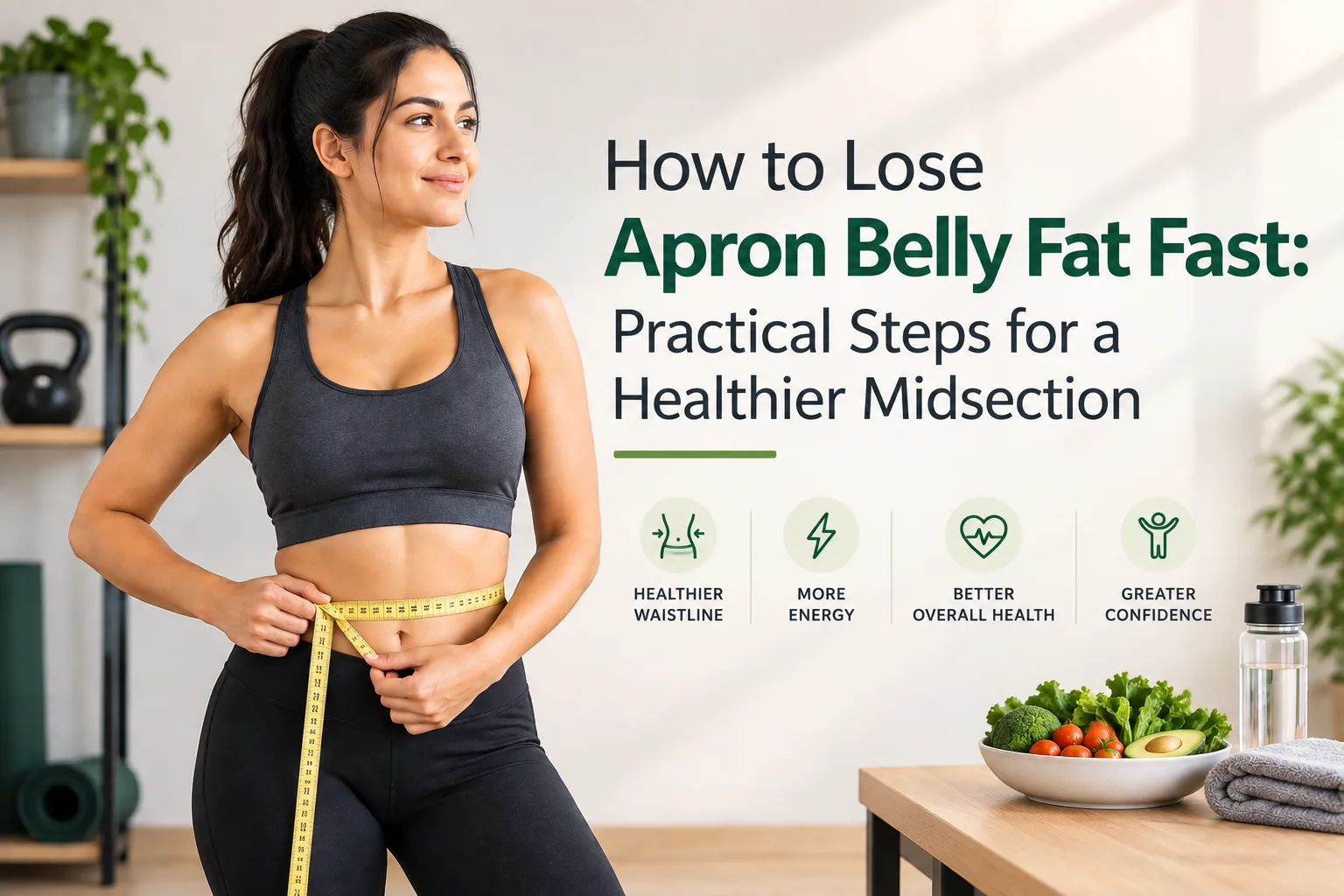
Apron belly refers to excess fat and loose skin that hangs over the lower abdomen, often around the waist, hips, and upper thighs. It can develop after significant weight gain or weight loss, pregnancy, aging, or changes in body composition.
If you want to know how to lose apron belly fat fast, the key is to focus on overall body-fat reduction rather than trying to burn fat from one specific area. A consistent calorie deficit, regular exercise, adequate protein, good sleep, and sustainable eating habits can help reduce abdominal fat over time.
Can You Lose Apron Belly Fat Quickly?
You can reduce the amount of abdominal fat, but there is no reliable way to make apron belly disappear within a few days. The body loses fat according to individual genetics, hormones, energy balance, and overall body composition, so fat reduction cannot be precisely directed toward the lower stomach.
A realistic approach combines nutrition and physical activity. Rapid weight-loss methods may produce quick changes on the scale, but they are often difficult to maintain and may not address loose skin that remains after substantial weight loss. The goal should be steady progress while preserving muscle and supporting overall health.
Create a Calorie Deficit for Overall Fat Loss
A calorie deficit occurs when you consistently consume less energy than your body uses. This encourages the body to use stored energy, including body fat, which can gradually reduce the size of the abdomen.
Instead of dramatically cutting food intake, focus on meals that are filling and nutrient-dense. Build most meals around lean protein, vegetables, fruit, whole grains, beans, and other minimally processed foods.
Helpful habits include:
- Choose water or unsweetened drinks more often.
- Reduce frequent high-calorie snacks and sugary beverages.
- Include a protein source at each main meal.
- Pay attention to portion sizes without eliminating entire food groups.
- Keep highly processed foods occasional rather than making them the foundation of your diet.
A moderate, sustainable calorie deficit is generally easier to maintain than an aggressive diet.
Strength Training Helps Preserve Muscle
Strength training is useful during fat loss because it helps maintain and develop lean muscle while your body weight decreases. More muscle can also contribute to a stronger, firmer appearance as overall body fat comes down.
You do not need complicated equipment to get started. Exercises such as squats, lunges, rows, push-ups, hip hinges, and presses can form the foundation of a full-body routine.
What About Ab Exercises?
Core exercises can strengthen the abdominal muscles, but they do not specifically burn the fat covering those muscles. Planks, dead bugs, leg raises, and controlled crunch variations can improve core strength, while nutrition and full-body activity are more important for reducing overall body fat.
Think of core training as part of your fitness program rather than a standalone solution for apron belly fat.
Add Cardio Exercise to Increase Activity
Cardio exercise can increase energy expenditure and support a calorie deficit. Walking, cycling, swimming, jogging, dancing, and similar activities can all be useful depending on your fitness level and preferences.
You do not necessarily need intense workouts every day. A regular brisk walking routine can be a practical starting point, particularly if you are currently inactive.
As your fitness improves, you can gradually increase the duration or intensity of your sessions. Combining cardio with strength training provides a more balanced approach than relying exclusively on one type of exercise.
Prioritize Protein and High-Fiber Foods
Your diet can make fat loss easier by emphasizing foods that provide protein, fiber, and plenty of nutrients without excessive calories.
Protein-rich foods such as eggs, Greek yogurt, fish, poultry, lean meat, tofu, beans, and lentils can help make meals more satisfying. Fiber-rich foods such as vegetables, fruits, legumes, oats, and whole grains can also contribute to fullness.
A simple meal structure is:
- Start with a protein source.
- Add a generous serving of vegetables or fruit.
- Include an appropriate portion of whole grains or another carbohydrate.
- Add a moderate amount of healthy fat.
This approach can help control hunger while giving your body the nutrients needed to support regular exercise.
Sleep and Stress Can Affect Your Progress
Fat loss is not determined by food and exercise alone. Sleep, stress, daily activity, and your ability to consistently follow your routine also matter.
Poor sleep can make healthy eating and regular exercise more difficult. High stress may also affect eating behavior, particularly if you tend to use food as a response to stress or fatigue.
Aim for a consistent sleep schedule and build manageable stress-relief habits into your routine. Walking, stretching, recreational activities, breathing exercises, and time away from screens can all be useful additions.
What If the Apron Belly Is Mostly Loose Skin?
Not all lower-abdominal overhang is body fat. After substantial weight loss or pregnancy, some people have loose or stretched skin that does not tighten completely even after reaching a healthy weight.
Exercise can strengthen the underlying muscles, while further fat loss may reduce the amount of tissue beneath the skin. However, exercise cannot remove excess skin.
If a large amount of loose skin causes discomfort, hygiene problems, skin irritation, or difficulty with daily activities, discuss your options with a qualified healthcare professional. Surgical procedures may be considered in some circumstances, but they are medical decisions rather than standard weight-loss methods.
Common Mistakes That Slow Abdominal Fat Loss
Trying to lose apron belly quickly can lead people toward strategies that are difficult to maintain. Avoid relying on detoxes, extreme fasting, waist trainers, or products that promise targeted belly-fat loss.
Other common mistakes include:
- Doing hundreds of crunches while ignoring overall nutrition.
- Cutting calories excessively.
- Exercising intensely without allowing adequate recovery.
- Eliminating carbohydrates unnecessarily.
- Expecting the stomach to change before other areas of the body.
- Giving up after short-term fluctuations in body weight.
Your waist measurement and appearance can also fluctuate because of hydration, digestion, food intake, and other temporary factors. Consistency over several weeks is more informative than judging progress from a single day.
How to Make Your Fat-Loss Routine Sustainable
The most effective routine is one you can continue. Rather than trying to completely change your lifestyle overnight, choose a few habits that fit your schedule and gradually build from them.
A practical weekly approach might include several strength-training sessions, regular walking or other cardio activity, balanced meals, and consistent sleep. Adjust the amount of exercise according to your current fitness level and any physical limitations.
If you have a medical condition, are pregnant or recently gave birth, take medications that affect weight or appetite, or have a history of disordered eating, individualized guidance from an appropriate healthcare professional can help you choose a safer approach.
A Realistic Approach to Losing Apron Belly Fat
There is no exercise, food, or supplement that can selectively remove apron belly fat. The most practical strategy is to reduce overall body fat through sustainable nutrition and regular physical activity while preserving muscle with resistance training.
Your results may also depend on how much of the abdominal overhang is fat versus loose skin. Focus on measurable habits—balanced meals, appropriate portions, strength training, cardio, daily movement, and adequate recovery—rather than searching for a shortcut.
Frequently Asked Questions (FAQ’S)
Yes. Walking can increase daily energy expenditure and support a calorie deficit, which can contribute to overall fat loss. Brisk walking is particularly useful because it is accessible and can be performed regularly. However, walking cannot specifically target apron belly fat; changes in the abdomen occur as part of overall changes in body fat.
There is no single exercise that specifically burns apron belly fat. A combination of full-body strength training, regular cardio, and increased daily movement is more useful. Core exercises can strengthen the abdominal muscles, but reducing the fat covering them requires overall fat loss rather than repeated abdominal exercises alone.
If the overhang is primarily body fat, losing overall body fat can reduce its size. If much of the overhang consists of excess loose skin, exercise and weight loss may not remove it completely. Persistent or substantial excess skin can be discussed with a qualified healthcare professional to understand available options.
The timeline varies considerably between individuals. Body size, starting body-fat level, calorie intake, activity, genetics, age, and other factors can influence the rate of change. Rather than expecting a specific number of days or weeks, focus on sustainable habits and evaluate progress over time using body weight, waist measurements, clothing fit, and fitness improvements.
Ab workouts strengthen the muscles of your core but do not selectively burn the fat stored over your lower abdomen. Exercises such as planks, crunches, and leg raises can be included in a balanced program, while overall calorie balance, strength training, cardio, and nutrition are more relevant to reducing abdominal body fat.