
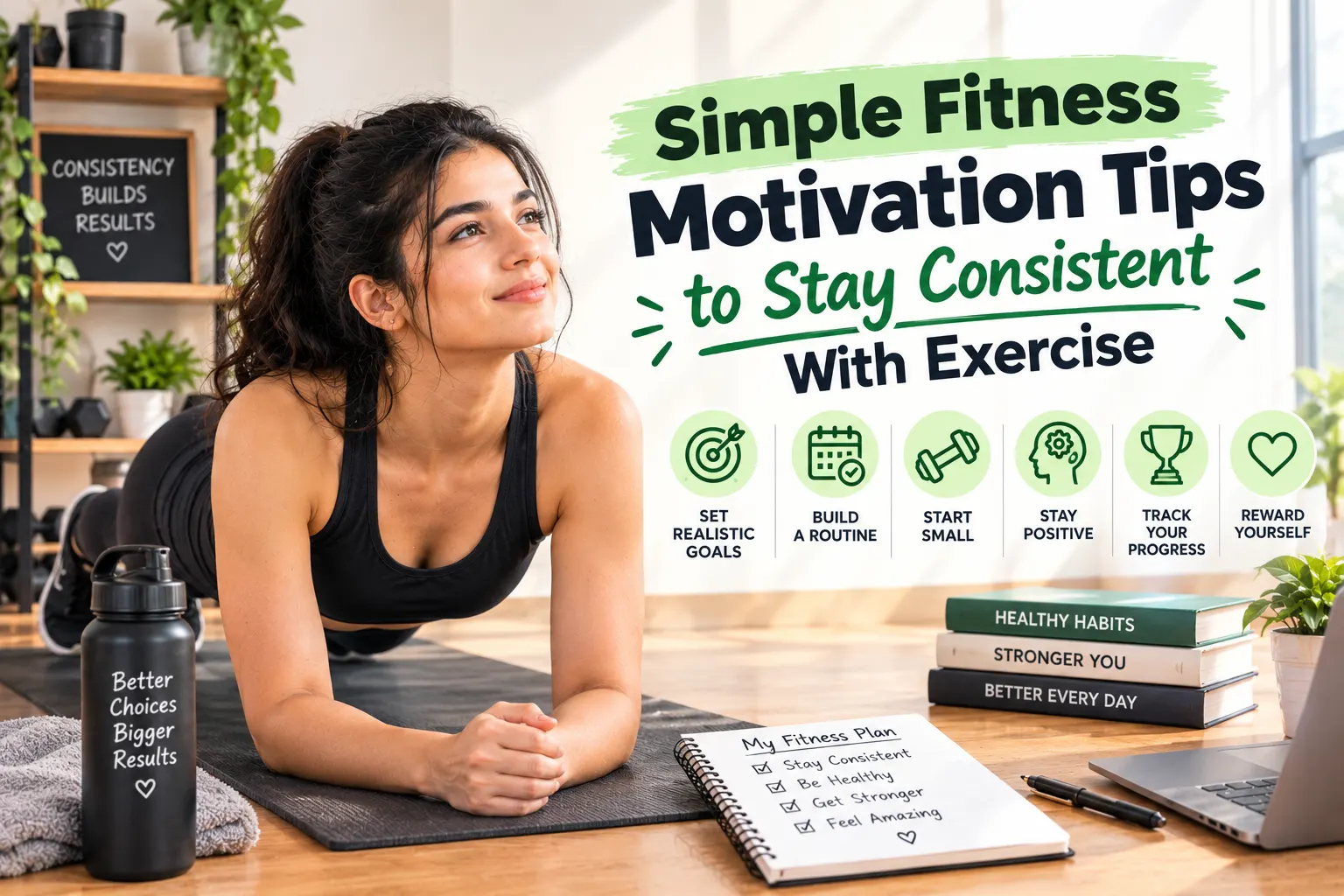
Staying consistent with exercise can be challenging, especially when work, family responsibilities, stress, or tiredness compete for your time. You might begin a workout routine with enthusiasm, only to lose interest after a few days. The solution is not to depend on motivation alone but to build habits that make exercise easier to maintain.
The best fitness motivation tips focus on realistic goals, enjoyable activities, manageable workouts, and steady progress. You do not need to feel excited every day or spend hours at the gym to develop a consistent fitness routine.
Whether you are a beginner or returning to exercise after a long break, small changes to your daily habits can help you stay active and make physical activity a lasting part of your lifestyle.
1. Set Realistic Fitness Goals
One of the most effective ways to stay motivated is to set goals that match your current fitness level. Unrealistic expectations, such as exercising intensely every day or expecting visible results within a week, can make a routine feel overwhelming.
Start with specific, achievable targets. For example, aim to walk for 15 minutes after work, complete two strength-training sessions each week, or stretch for five minutes each morning.
Once these activities become manageable, gradually increase the duration or difficulty. Small accomplishments help you recognize progress and create a sense of consistency.
Focus on goals you can control, such as completing your planned workouts, rather than relying entirely on changes in body weight or appearance.
2. Create a Consistent Exercise Schedule
A regular schedule removes the need to decide when to exercise every day. Choose a time that fits your lifestyle and energy levels, whether that is early morning, lunchtime, or evening.
Treat your workouts like appointments. Add them to your calendar and prepare anything you need beforehand, such as comfortable clothing, water, or your workout equipment.
You should also make your schedule flexible enough to handle unexpected responsibilities. If you cannot complete a full workout, try a shorter session or take a walk instead.
Consistency does not mean following a perfect schedule without interruption. It means returning to your routine after setbacks rather than abandoning it completely.
3. Choose Workouts You Actually Enjoy
Exercise becomes easier to maintain when you enjoy the activity. If you dislike running, you do not have to force yourself to run every morning to stay fit.
Try different forms of physical activity, including brisk walking, cycling, dancing, swimming, yoga, or bodyweight exercises. You can also combine several activities throughout the week to keep your routine interesting.
Consider your available time, budget, fitness level, and personal preferences when choosing workouts. Someone who enjoys outdoor activities might prefer walking in a park, while another person may feel more comfortable exercising at home.
The most useful workout is one you can perform safely and repeat consistently. Enjoyment can help turn exercise from an obligation into a rewarding part of your day.
4. Start Small to Build Better Fitness Habits
Waiting until you feel motivated can make exercise harder to begin. Instead, reduce the effort required to get started by setting a small minimum goal.
Tell yourself that you will exercise for five minutes. Put on your workout clothes, begin with a short walk, or complete a few easy bodyweight movements.
You may decide to continue once you get moving. If you are genuinely tired or short on time, a brief session can still help you maintain your routine.
Other practical ways to build exercise habits include:
- Prepare workout clothes the night before.
- Keep your exercise space clean and ready.
- Choose your workout in advance.
- Listen to music or a podcast while exercising, when appropriate.
- Keep your phone away from distractions during training.
These small adjustments reduce friction and make it easier to follow through on your plans.
5. Track Your Progress to Maintain Motivation
Tracking your workouts helps you see improvements that might otherwise go unnoticed. Physical changes can take time, but progress may also appear as better endurance, improved strength, greater flexibility, or more energy during everyday activities.
Use a notebook, calendar, or fitness app to record your exercise sessions. Depending on your goals, you might track workout duration, walking distance, repetitions, or how challenging an activity feels.
For example, you may notice that you can walk for 25 minutes without feeling as tired as you did when you started. You might also find that exercises become easier or that you recover more comfortably between sessions.
Review your progress every few weeks rather than judging each workout individually. Celebrate improvements while remembering that occasional setbacks are a normal part of developing a sustainable routine.
6. Find an Accountability Partner
Having someone to share your fitness goals with can make exercise more enjoyable and encourage consistency. A friend, family member, or workout partner can help you stay committed to planned activities.
You could schedule regular walks together, attend a fitness class, or check in with each other after completing workouts. Even a simple message confirming that you exercised can provide encouragement.
If you prefer working out alone, use a calendar or habit tracker to mark completed sessions. Seeing your efforts recorded can help reinforce the behavior.
Choose supportive people who respect your pace and goals. Avoid turning exercise into a competition that encourages you to ignore fatigue, compare your appearance, or push beyond your current abilities.
7. Support Your Routine With Proper Sleep and Nutrition
Low workout motivation sometimes comes from physical exhaustion rather than a lack of discipline. Inadequate sleep, insufficient food, dehydration, and excessive training can make exercise feel more difficult.
Eat balanced meals containing carbohydrates, protein, healthy fats, fruits, and vegetables. Drink water regularly and pay attention to hydration needs during exercise, especially in hot weather.
Recovery also matters. Adults generally need at least seven hours of sleep per night, although individual needs vary. Beginners may benefit from two or three weekly strength-training sessions, with lighter activity or rest between demanding workouts.
If you consistently experience unusual fatigue despite getting adequate rest, consider reducing your training load and consulting a healthcare professional if the problem persists.
Taking care of your body makes it easier to approach exercise with steady energy.
8. Use a Flexible Weekly Fitness Plan
A simple plan can help you stay active without feeling pressured to exercise intensely every day. Adjust the activities and duration to your fitness level, schedule, and recovery needs.
| Day | Suggested activity |
|---|---|
| Monday | 15–20 minutes of brisk walking |
| Tuesday | Beginner strength-training workout |
| Wednesday | Gentle yoga or stretching |
| Thursday | Walking, cycling, or swimming |
| Friday | Strength-training session |
| Saturday | Enjoyable outdoor activity or dancing |
| Sunday | Rest or gentle movement |
This schedule provides a starting point rather than a strict rule. If you are new to exercise, begin with shorter sessions and increase gradually.
Remember that daily consistency does not require daily intense workouts. Recovery days allow you to maintain an active lifestyle while giving your body time to adapt.
9. Overcome Common Motivation Barriers
Even with a good plan, there will be days when exercise feels difficult. Identifying your main obstacle can help you find a practical solution.
If you are short on time: Divide activity into shorter sessions or choose a 10-minute home workout.
If you feel bored: Change your activity, explore a new walking route, or try a different beginner workout.
If you miss a session: Resume at your next available opportunity instead of waiting until Monday.
If you are not seeing results: Review your goals and track improvements in strength, endurance, and consistency.
If you feel exhausted: Consider whether you need more sleep, a lighter workout, or additional recovery time.
The goal is not to eliminate every difficult day. It is to develop strategies that help you respond to challenges without giving up on your long-term fitness habits.
Make Fitness Motivation a Long-Term Habit
The most effective fitness motivation tips are the ones you can apply consistently. Set realistic goals, choose enjoyable activities, schedule manageable workouts, and track progress beyond physical appearance.
You will not always feel motivated, and that is normal. Build a routine that works even on ordinary days when your energy or enthusiasm is low, while allowing yourself to rest when necessary.
Start with small steps, adjust your plan as your fitness improves, and focus on consistency rather than perfection. Over time, these habits can help make exercise a natural and sustainable part of your lifestyle.
Frequently Asked Questions
1. How do I stay consistent with exercise when I have a busy schedule?
Choose short workouts that fit into your existing routine instead of waiting for a large block of free time. Schedule exercise in advance, prepare your equipment beforehand, and consider breaking activity into smaller sessions. Even brief periods of movement can help you maintain an active habit when your schedule becomes demanding.
2. What is the best way to stay motivated to exercise at home?
Create a dedicated workout space, select exercises you enjoy, and follow a simple routine that requires little preparation. Set small goals and track completed sessions on a calendar. If you struggle to begin, commit to five minutes of movement first. Making workouts convenient can reduce common barriers to exercising at home.
3. Why do I lose motivation after starting a workout plan?
You may be setting goals that are too demanding, choosing activities you dislike, or expecting results too quickly. A routine that does not fit your schedule can also become difficult to maintain. Start with manageable sessions, allow time for recovery, and measure progress through consistency and improved fitness rather than appearance alone.
4. Should I exercise every day to build a consistent habit?
No. You can build a consistent exercise habit without performing demanding workouts daily. Combine strength training with walking, cycling, yoga, or other enjoyable activities, and schedule rest when needed. The right frequency depends on your fitness level, health, recovery, and goals. Regular activity matters more than exercising intensely every day.
5. How can I stay motivated when I am not seeing fitness results?
Track improvements such as increased strength, better endurance, more comfortable movement, and greater consistency. Visible changes may take time and differ between individuals. Review your routine every few weeks, make gradual adjustments when needed, and celebrate achievable milestones. If progress remains unclear, consider whether your goals, training plan, nutrition, and recovery need adjustment.