
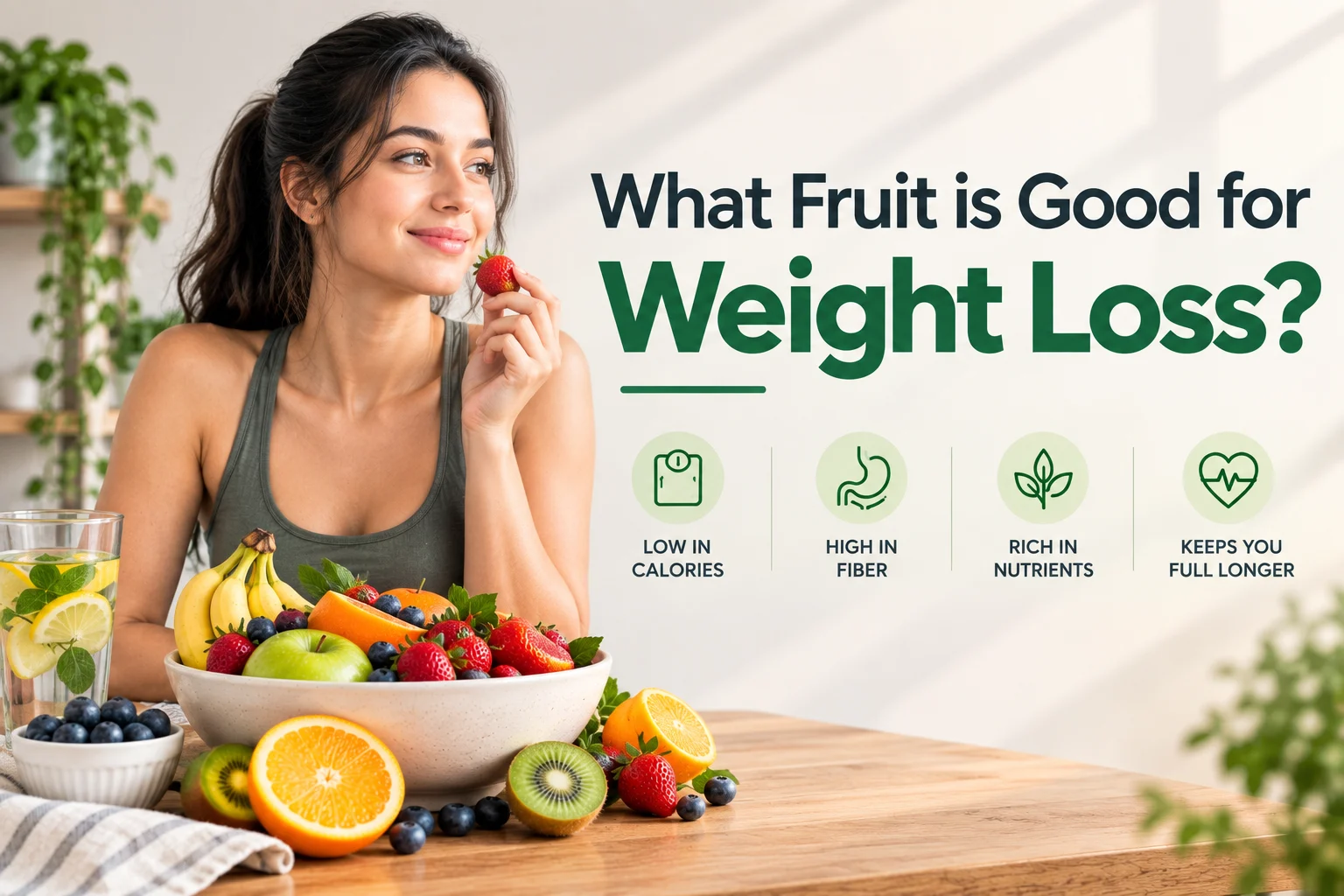
If you’re trying to lose weight, fruit can be a useful part of a balanced diet. Fruits provide fiber, water, vitamins, minerals, and naturally occurring carbohydrates while often being relatively low in calories compared with many processed snacks and desserts.
But there is no single fruit that automatically causes weight loss. The most helpful choices are usually fruits that are filling, nutrient-dense, and easy to include in a diet that supports an appropriate calorie intake. How you eat fruit also matters, particularly when comparing whole fruit with juice or heavily processed fruit products.
Which Fruit Is Best for Weight Loss?
Whole fruits such as berries, apples, oranges, grapefruit, pears, kiwi, and watermelon can fit well into a weight-loss diet. Their nutritional profiles differ, so the best choice depends partly on your preferences, appetite, overall diet, and individual nutritional needs.
For many people, high-fiber fruits are particularly useful because fiber can help make meals and snacks more satisfying. Whole fruit also requires chewing, which can make it more filling than drinking the same fruit as juice.
Rather than searching for one “best” fruit, consider rotating several options throughout the week.
Some nutritious choices include:
- Berries: Strawberries, raspberries, blackberries, and blueberries provide fiber and are easy to add to yogurt or oatmeal.
- Apples: Convenient, portable, and naturally rich in fiber.
- Oranges: Provide water, fiber, and vitamin C when eaten whole.
- Pears: A fiber-rich option that can work well as a snack.
- Kiwi: Provides fiber and vitamin C with a relatively small serving size.
- Watermelon: Has a high water content and can be refreshing, especially in warm weather.
- Grapefruit: Can be included as part of a balanced diet, although it can interact with certain medications.
High-Fiber Fruits for Weight Loss
Fiber is one of the most useful nutritional features to consider when choosing fruit for weight management. Dietary fiber can contribute to fullness and supports normal digestive function.
Whole fruits generally provide more fiber than fruit juice because much of the fruit’s structure remains intact.
How Much Fruit Should You Eat?
There is no universal amount of fruit that guarantees weight loss. Your appropriate intake depends on your overall diet, energy needs, activity level, age, and individual health circumstances.
A practical approach is to treat fruit as part of your overall daily food pattern rather than as a special weight-loss food. You can include fruit at breakfast, as a snack, or alongside meals while paying attention to your overall portion sizes and hunger.
If you’re consistently hungry between meals, pairing fruit with another nutritious food can make a snack more satisfying.
Low-Calorie Fruits That Make Filling Snacks
Some fruits are particularly useful when you want a substantial snack without relying on highly processed foods. Water-rich fruits can provide volume, while fiber can contribute to satiety.
For example, an apple can be paired with a small serving of nut butter, while berries can be combined with plain yogurt. An orange can also make a simple snack on its own.
The combination matters because weight management is influenced by your overall energy intake rather than by one particular food.
Instead of asking whether a fruit is “fattening,” consider how it fits into your complete eating pattern.
Whole Fruit vs. Fruit Juice for Weight Management
Whole fruit is generally a more useful choice for weight management than fruit juice. Eating whole fruit preserves its natural structure and fiber, while juice is easier to consume quickly and may provide less fiber.
A glass of juice can contain the juice of multiple pieces of fruit without providing the same chewing experience or fullness as eating those fruits whole.
This does not mean fruit juice can never be part of a healthy diet. It simply means whole fruit is often the more practical option when your goal is to make snacks filling and nutrient-dense.
Similarly, smoothies can vary considerably. A smoothie made primarily from whole fruits and other nutritious ingredients can be different nutritionally from a sweetened commercial drink. Ingredients and portion size matter.
How to Add Fruit to a Weight-Loss Diet
Adding fruit does not require a complicated meal plan. The easiest approach is to replace less nutritious snacks or desserts with whole fruit rather than simply adding extra food on top of your existing diet.
Try simple combinations such as:
- Berries with plain Greek yogurt
- Apple with a small amount of peanut or almond butter
- Sliced banana with oatmeal
- Orange with a handful of nuts
- Pear with cottage cheese or yogurt
- Kiwi added to a balanced breakfast
- Watermelon alongside a protein-rich meal
Pairing fruit with protein, healthy fats, or other nutrient-dense foods can make a snack more substantial and may help you stay satisfied between meals.
Fruits to Limit or Watch Portions Of
No fruit needs to be automatically eliminated because you’re trying to lose weight. However, portion awareness can still matter with calorie-dense or concentrated fruit products.
Dried fruit is a good example. Removing water makes dried fruit much smaller and easier to eat in large quantities. A handful can therefore contain considerably more fruit than it appears to.
Fruit-based desserts, sweetened canned fruit, fruit drinks, and flavored products can also contain added sugars or other ingredients that change their nutritional profile.
When possible, choose fruit in its whole form and check food labels on packaged products.
Does Eating Fruit at Night Cause Weight Gain?
Eating fruit at night does not automatically cause weight gain. Weight changes are influenced by overall energy intake and expenditure over time, rather than simply whether fruit is eaten at a particular hour.
If you enjoy fruit as an evening snack, there is generally no nutritional reason to avoid it solely because it is nighttime. What matters more is the overall amount and quality of food you consume throughout the day.
Individual preferences also matter. Some people find fruit satisfying as an evening snack, while others prefer a more substantial food combination.
Practical Tips for Choosing Fruit for Weight Loss
Use these simple strategies to make fruit work better within your eating routine:
Choose whole fruit most often. Whole apples, berries, oranges, pears, and other fruits retain their natural structure and fiber.
Keep convenient options available. Washed berries, bananas, apples, and oranges can make nutritious choices easier when you’re hungry.
Pay attention to portions. Even nutritious foods contribute calories, so portions still matter within an overall weight-management plan.
Combine fruit with other nutrients. Yogurt, nuts, seeds, cottage cheese, or another protein-rich food can make a snack more satisfying.
Avoid turning fruit into a dessert replacement loaded with extras. Fruit itself can be nutritious, but large amounts of syrups, cream, sweeteners, or sugary toppings can substantially change the meal.
Focus on dietary variety. Different fruits provide different nutrients, so rotating your choices can make your diet more varied and enjoyable.
Can Fruit Alone Help You Lose Weight?
Fruit alone is not a weight-loss solution. Sustainable weight management usually depends on an overall eating pattern, appropriate calorie intake, regular physical activity, adequate sleep, and other lifestyle factors.
Replacing calorie-dense processed snacks with whole fruit can be useful, but simply adding large quantities of fruit to your existing diet is not necessarily helpful for weight loss.
If you have diabetes, take medications that affect blood sugar, have a gastrointestinal condition, or have another health concern that affects your diet, your ideal fruit intake may require individual guidance from a qualified healthcare professional.
Conclusion
So, what fruit is good for weight loss? There are several good choices, including berries, apples, pears, oranges, kiwi, watermelon, and grapefruit. Rather than relying on one “fat-burning” fruit, focus on whole fruits that provide fiber, water, and nutrients while fitting comfortably into your overall diet.
The most useful fruit is ultimately one you enjoy, can eat in appropriate portions, and can consistently include as part of a balanced eating pattern. Pairing fruit with protein or other nutritious foods can also make snacks more satisfying and easier to fit into a healthy routine.