
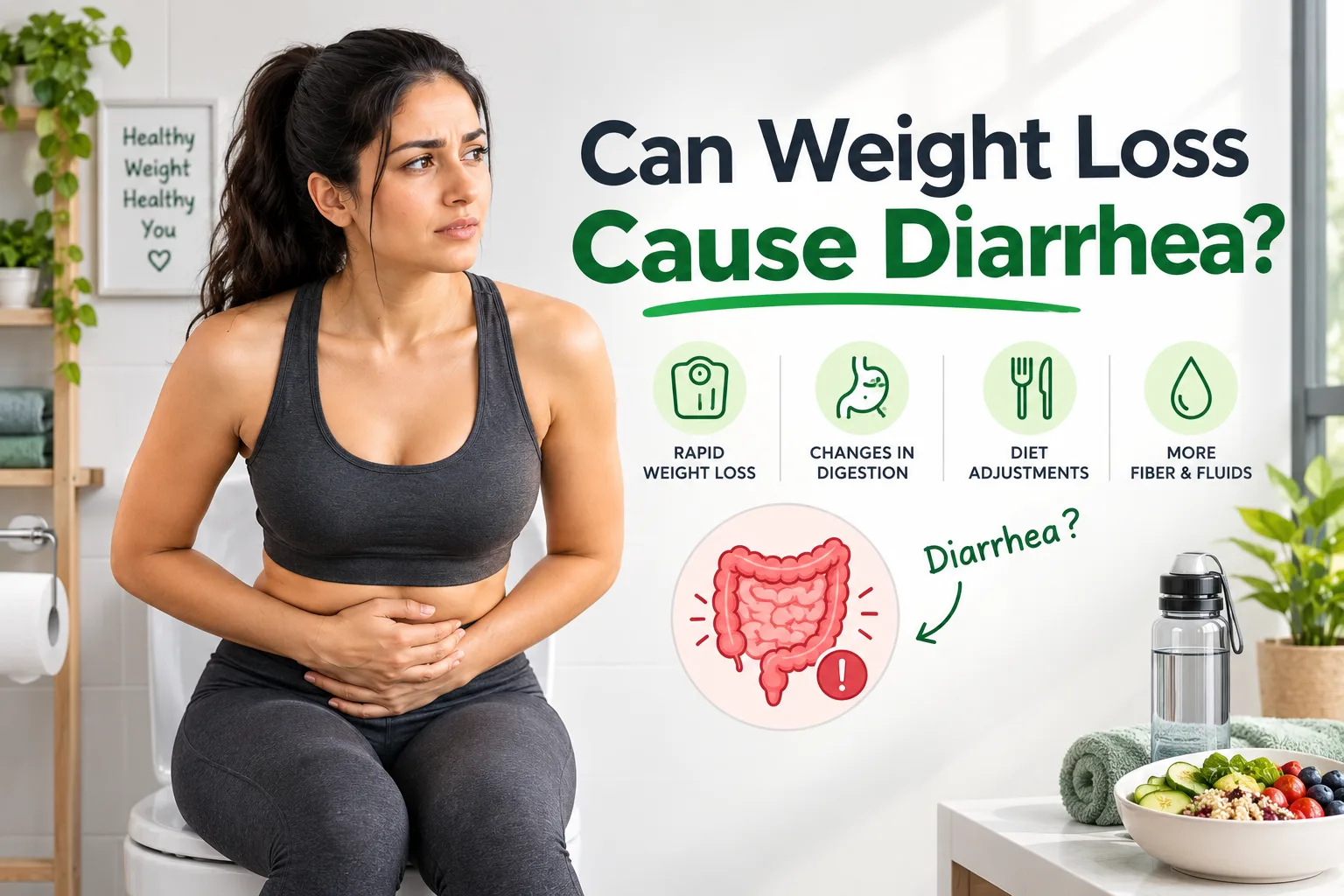
Yes, weight loss can sometimes be associated with diarrhea, but losing body fat does not usually cause diarrhea directly. In many cases, diarrhea happens because of changes made during a weight-loss journey, such as eating more fiber, changing your diet suddenly, using certain supplements, or consuming large amounts of low-calorie foods.
If you are losing weight intentionally and experiencing diarrhea, it is worth looking at what has changed in your diet and routine. Persistent or unexplained diarrhea, especially when accompanied by unintentional weight loss, should be discussed with a healthcare professional.
Can Losing Weight Cause Diarrhea?
Weight loss itself is not usually the direct cause of diarrhea. Instead, the eating habits, supplements, or dietary changes used to lose weight may affect your digestive system.
For example, someone who suddenly starts eating more vegetables, fruits, beans, whole grains, or other high-fiber foods may notice softer or more frequent bowel movements. Similarly, switching to low-calorie or sugar-free products can sometimes cause digestive discomfort.
If diarrhea begins soon after starting a new weight-loss diet, consider whether the diet itself has changed your normal digestion.
Why Does Weight Loss Sometimes Lead to Loose Stools?
There are several reasons diarrhea may appear while you are trying to lose weight.
A Sudden Increase in Fiber
Fiber is an important part of a healthy diet, but increasing it too quickly can cause bloating, gas, stomach discomfort, and loose stools.
This can happen when someone suddenly adds large amounts of vegetables, fruits, beans, lentils, oats, bran, or whole grains to their meals.
If your previous diet contained little fiber, increase your intake gradually. This gives your digestive system more time to adjust.
Sugar Alcohols in Diet Foods
Many low-calorie, sugar-free, and reduced-sugar products contain sugar alcohols such as sorbitol, mannitol, or xylitol.
These ingredients can cause gas, bloating, or diarrhea when consumed in larger amounts by some people.
If your diarrhea started after adding protein bars, sugar-free candy, low-calorie desserts, or similar products to your diet, check the ingredient labels.
High-Fat Meals
Some weight-loss diets encourage foods that are relatively high in fat, such as nuts, seeds, avocado, oils, cheese, or other full-fat foods.
These foods can be part of a healthy diet, but suddenly consuming much more dietary fat than you are used to may cause digestive problems in some people.
Large, greasy meals may be particularly difficult to tolerate.
Can a Low-Carb Diet Cause Diarrhea?
A low-carb diet does not automatically cause diarrhea, but changing your diet dramatically can affect your bowel movements.
When people reduce carbohydrates, they may replace foods such as rice, bread, pasta, or cereals with larger amounts of meat, dairy, eggs, oils, nuts, or low-carb packaged foods.
This change can alter your usual intake of fat, fiber, and certain sweeteners. Some people adjust without problems, while others may experience temporary digestive symptoms.
If diarrhea continues, review the specific foods and products you added rather than assuming that carbohydrates themselves were responsible.
Can Intermittent Fasting Cause Diarrhea?
Intermittent fasting can change when and how much you eat. Some people may experience digestive discomfort when beginning a fasting routine, particularly if they eat very large meals after a long period without food.
Eating a large amount of food quickly can sometimes lead to bloating, cramping, or loose stools.
Intermittent fasting is not required for healthy weight loss. If fasting consistently causes digestive problems, weakness, dizziness, or other uncomfortable symptoms, consider changing your approach and speaking with a healthcare professional if needed.
Does Diarrhea Mean You Are Losing Fat?
No. Diarrhea does not mean that you are losing body fat faster.
Diarrhea can cause your body to lose fluids and electrolytes. This may cause the number on the scale to drop temporarily, but that change is not the same as losing body fat.
Once you replace the fluids you have lost and return to your normal eating and drinking habits, some of the weight may return.
Using diarrhea, laxatives, extreme fasting, or severe food restriction to lose weight is not a safe or effective weight-loss strategy.
Healthy fat loss comes from sustainable changes in nutrition, physical activity, and overall lifestyle.
Weight Loss Diets That May Affect Digestion
If diarrhea develops during a weight-loss program, think about what changed in your routine.
Common changes that may affect digestion include:
- Eating significantly more fiber
- Increasing your intake of protein shakes or supplements
- Using sugar-free or low-calorie products
- Suddenly eating more high-fat foods
- Making very large changes to portion sizes
- Starting intermittent fasting
- Drinking more coffee or caffeinated beverages
- Trying unfamiliar foods
- Taking new vitamins or supplements
Not everyone will react to these changes in the same way. Keeping track of what you eat and when symptoms occur can help you identify possible triggers.
How to Prevent Diarrhea While Losing Weight
You do not need to stop trying to lose weight simply because your digestion has changed. Instead, consider making your diet more gradual and balanced.
If you are increasing fiber, do it slowly rather than adding large amounts all at once. Choose a variety of foods instead of relying heavily on one type of food.
Drink enough fluids, especially if you are eating more fiber or exercising regularly. However, if you already have diarrhea, replacing lost fluids becomes particularly important.
You should also be careful with weight-loss supplements. Products marketed as fat burners, detoxes, cleanses, or appetite suppressants may contain ingredients that affect digestion.
A simple, balanced diet is generally a better foundation for weight management than relying on aggressive weight-loss products.
When Is Diarrhea During Weight Loss a Problem?
Occasional loose stools may resolve once your body adjusts to a dietary change. However, diarrhea that persists or repeatedly returns should not simply be ignored.
Pay particular attention if diarrhea occurs with:
- Severe or persistent abdominal pain
- Fever
- Repeated vomiting
- Blood in the stool
- Black or unusually dark stools
- Significant weakness or dizziness
- Signs of dehydration
- Unexplained weight loss
Unintentional weight loss combined with ongoing diarrhea can have causes that are unrelated to your diet. In that situation, professional medical evaluation is appropriate.
Healthy Weight Loss Without Digestive Problems
A good weight-loss plan should support your overall health rather than leave you constantly dealing with digestive problems.
Build meals around a variety of nutritious foods, including vegetables, fruits, eliminate carbohydrates, fats, or other food groups simply to lose weight. What matters is creating an protein sources, whole grains or other carbohydrate sources, and healthy fats.
You do not need to completely eliminate carbohydrates, fats, or other food groups simply to lose weight. What matters is creating an eating pattern that provides adequate nutrition while supporting your weight-management goals.
Regular physical activity can also support weight management. Walking, strength training, cycling, swimming, and other enjoyable activities can be included according to your fitness level.
Most importantly, avoid extreme diets that promise very rapid weight loss.
The Bottom Line
Can weight loss cause diarrhea? Weight loss itself usually does not directly cause diarrhea. More often, diarrhea is related to changes made during a weight-loss diet, such as suddenly, recurrent, or accompanied by pain, fever, blood in the stool, dehydration, or unexplained weight loss, seek medical increasing fiber, eating more fat, consuming sugar alcohols, using supplements, or changing your meal pattern.
Diarrhea is not a sign that you are successfully burning more body fat. A sudden drop on the scale during diarrhea is often related to fluid loss.
If your diarrhea is persistent, severe, recurrent, or accompanied by pain, fever, blood in the stool, dehydration, or unexplained weight loss, seek medical advice to determine the underlying cause.
Frequently Asked Questions
Can weight loss cause diarrhea and stomach problems?
Weight loss itself does not normally cause diarrhea or stomach problems. However, changing your diet can affect digestion. Increasing fiber too quickly, eating more fat, consuming sugar alcohols, using supplements, or changing meal sizes can cause loose stools, bloating, or stomach discomfort in some people.
Why am I having diarrhea after starting a weight-loss diet?
Your new diet may contain foods or ingredients your digestive system is not accustomed to. Common triggers include a sudden increase in fiber, protein supplements, sugar-free foods, high-fat meals, or large changes in meal timing. Look at what changed shortly before your symptoms started.
Does diarrhea make you lose weight?
Diarrhea can cause temporary weight loss because your body loses fluids and digestive contents. This is different from losing body fat. Once you replace lost fluids and return to your normal eating pattern, some of the weight may return. Diarrhea should never be used intentionally as a weight-loss method.