
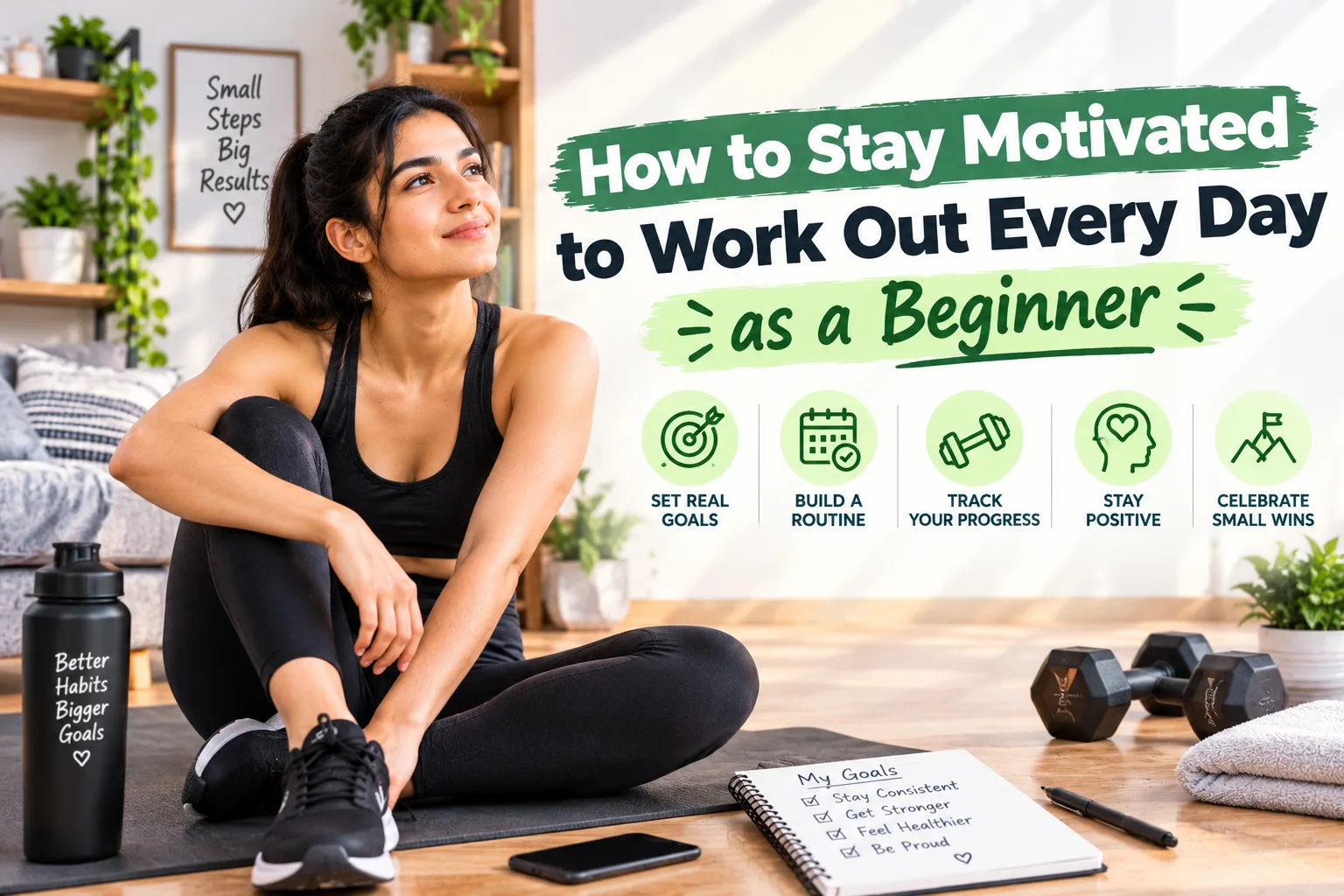
Starting a fitness journey is exciting, but staying motivated to exercise consistently can be challenging. You might feel enthusiastic during the first few days, only to struggle with low energy, a busy schedule, or a lack of visible results. This is a common experience for beginners, and it does not mean you lack discipline.
Learning how to stay motivated to work out every day starts with building realistic habits rather than relying on motivation alone. A manageable workout routine, achievable goals, and a clear reason for exercising can help you remain consistent even when you do not feel particularly motivated.
You do not need to spend hours at the gym or follow an intense fitness program. Small, repeatable actions can help you develop a healthier relationship with exercise and make physical activity a lasting part of your lifestyle.
1. Set Realistic Fitness Goals You Can Achieve
One of the easiest ways to lose workout motivation is to expect too much too soon. Beginners sometimes aim to exercise for an hour every day, transform their bodies within weeks, or follow routines designed for experienced athletes. These expectations can quickly become overwhelming.
Instead, set small, specific goals that fit your current fitness level. For example, you might aim to walk for 15 minutes, complete two beginner strength workouts each week, or practice stretching after work.
Achievable goals give you opportunities to recognize progress without feeling pressured to do everything perfectly. Once your routine becomes comfortable, gradually increase your workout duration, frequency, or difficulty.
Focus on actions you can control, such as completing scheduled workouts, rather than relying entirely on outcomes such as weight changes or muscle definition.
2. Build a Consistent Workout Routine
Consistency becomes easier when exercise has a regular place in your day. Instead of deciding whether to work out every morning, choose a time that fits naturally into your schedule.
Some people prefer exercising before work, while others feel more energetic in the afternoon or evening. The best time is the one you can maintain without sacrificing sleep, work responsibilities, or recovery.
Start with a realistic weekly plan. For example, you could schedule short walks on several days and two beginner strength-training sessions during the week.
Treat these sessions as appointments with yourself, but allow flexibility when life gets busy. Missing one workout does not erase your progress. Return to your routine at the next suitable opportunity rather than waiting for a new week or month.
3. Use Small Fitness Habits to Overcome Laziness
You do not need to feel highly motivated before every workout. Often, getting started is the hardest part, so make the first step as easy as possible.
Try committing to just five minutes of movement when you feel reluctant to exercise. Put on your workout clothes, walk around the neighborhood, or complete a few bodyweight squats and wall push-ups.
Once you begin, you may feel ready to continue. If you are tired or short on time, however, a brief session can still be a reasonable way to maintain your habit.
Other useful strategies include:
- Prepare your workout clothes the night before.
- Keep your exercise area organized.
- Choose a simple workout instead of spending time deciding what to do.
- Pair exercise with something enjoyable, such as music or a favorite podcast.
- Reduce distractions by putting your phone away during training.
The goal is to remove unnecessary obstacles so that exercise requires less daily decision-making.
4. Choose Exercises You Actually Enjoy
A workout does not have to take place in a gym to support your fitness goals. Walking, cycling, dancing, swimming, yoga, and bodyweight training are all options that can help you become more active.
If you dislike a particular exercise, look for an alternative that trains similar abilities or fits your interests better. Someone who finds running unpleasant might enjoy brisk walking, while a person who dislikes traditional gym workouts may prefer a home exercise routine.
Enjoyment matters because a routine that feels manageable and satisfying is often easier to repeat. You can also vary your activities throughout the week to avoid boredom.
Experiment with different forms of movement until you find a combination that suits your preferences, schedule, available space, and current fitness level.
5. Track Your Workout Progress
Tracking your progress helps you recognize improvements that might otherwise go unnoticed. Physical changes can take time, but other signs of progress often appear earlier.
Keep a simple fitness journal or use a notes app to record your workouts, exercise duration, repetitions, walking distance, or how challenging a session felt.
For example, you might notice that a 20-minute walk feels easier than it did a few weeks ago, or that you can perform more controlled push-ups than when you started.
These improvements provide useful feedback and can strengthen your motivation to continue.
Avoid judging your success solely by the number on a scale. Energy levels, strength, endurance, flexibility, mood, and consistency are also meaningful ways to assess your progress.
6. Find Accountability and Workout Support
Exercising with another person can make your routine more enjoyable and help you follow through on your plans. A friend, family member, or workout partner can provide encouragement when your motivation drops.
You do not have to exercise together every day. You might schedule a weekly walk, share workout goals, or check in with each other after completing planned sessions.
Fitness communities can also provide ideas and a sense of connection. However, choose supportive environments that encourage realistic progress rather than pressuring you to compare your body or performance with others.
If you prefer exercising alone, accountability can be as simple as marking completed workouts on a calendar. Seeing a record of your effort may encourage you to keep building the habit.
7. Fuel Your Body and Get Enough Rest
Low motivation is not always a discipline problem. Inadequate sleep, insufficient food, stress, and demanding workout schedules can make exercise feel harder than it needs to be.
Eat balanced meals that include carbohydrates for energy, protein for muscle repair, and healthy fats alongside fruits and vegetables. Drink water regularly, particularly when exercising in hot conditions or sweating heavily.
Give your body time to recover between challenging workouts. Beginners can often start with two or three weekly strength-training sessions, alongside lighter activities such as walking, depending on their fitness level and recovery needs.
Adults generally benefit from at least seven hours of sleep each night, although individual needs vary. If you regularly feel unusually exhausted, reduce your training load and consider seeking professional advice if the fatigue persists.
Rest is part of a sustainable fitness routine, not evidence that you have failed.
8. Create a Positive Fitness Mindset
Your mindset can influence how you respond to difficult days. Instead of thinking, “I have to work out,” try viewing exercise as an opportunity to improve your strength, support your health, or take a break from daily stress.
Avoid all-or-nothing thinking. A short workout is not worthless simply because it is shorter than planned, and one missed session does not make you inconsistent.
It also helps to stop comparing your progress with people who have different fitness levels, schedules, or training experience. Social media often shows selected highlights rather than the full process behind someone’s results.
Celebrate the effort you put in, learn from setbacks, and adjust your routine when necessary. Sustainable fitness comes from repeated actions over time, not from being perfect every day.
A Simple Seven-Day Plan to Build Workout Motivation
If you are unsure where to begin, use this flexible weekly plan to establish a manageable exercise habit.
| Day | Activity |
|---|---|
| Monday | 15–20 minutes of brisk walking |
| Tuesday | Beginner bodyweight strength workout |
| Wednesday | Gentle yoga or mobility exercises |
| Thursday | 15–25 minutes of walking or cycling |
| Friday | Beginner strength-training session |
| Saturday | Enjoyable activity, such as dancing or hiking |
| Sunday | Rest or gentle movement |
Adjust the duration and intensity to your current ability. If you are new to exercise, begin with shorter sessions and build gradually rather than trying to complete every activity at full intensity.
This plan is a starting point, not a requirement to exercise hard every day. Recovery days help you maintain a routine without placing unnecessary stress on your body.
Turn Workout Motivation Into a Lasting Habit
Learning how to stay motivated to work out every day is less about feeling inspired all the time and more about creating a routine that works in real life. Set achievable goals, choose activities you enjoy, track your progress, and make exercise easy to begin.
Remember that daily movement does not have to mean daily intense training. Walking, stretching, strength workouts, and recovery days can all have a place in a balanced fitness schedule.
Start small, stay flexible, and focus on becoming more consistent rather than being perfect. Over time, regular exercise can become a natural part of your lifestyle instead of something you continually have to motivate yourself to do.
Frequently Asked Questions
1. How can I motivate myself to work out when I feel lazy?
Make the starting point easier by committing to just five minutes of movement. Prepare your workout clothes in advance, choose a simple activity, and remove distractions. You do not need to feel motivated before you begin. If you are genuinely exhausted or unwell, however, resting or choosing gentle movement may be more appropriate than forcing a difficult workout.
2. How long does it take to develop a consistent workout habit?
There is no fixed timeline for developing an exercise habit. It depends on your schedule, the difficulty of your routine, your environment, and your previous experience with exercise. Start with manageable sessions at consistent times, track your progress, and adjust your plan when necessary. Focus on repeating the behavior rather than expecting a habit to form by a specific date.
3. Should beginners work out every day to stay motivated?
No. Beginners do not need to perform intense workouts every day to build consistency. You can alternate strength training with walking, gentle yoga, or mobility exercises and include rest days when needed. This approach supports recovery and makes it easier to maintain a balanced routine without becoming overwhelmed by excessive training.
4. What should I do if I lose motivation after one week?
Review your routine instead of assuming you lack discipline. Your workouts may be too long, too difficult, or poorly timed for your schedule. Reduce the workload, choose activities you enjoy, and set smaller goals that feel achievable. A missed session or an unproductive week does not erase your progress; restart with the next manageable workout.
5. How can I stay motivated to exercise without seeing results?
Track improvements beyond appearance, such as increased strength, better endurance, more comfortable movement, and improved workout consistency. Visible physical changes can take time and vary between individuals. Set process-based goals, such as completing two strength sessions each week, and review your progress every few weeks rather than expecting noticeable changes after every workout.