
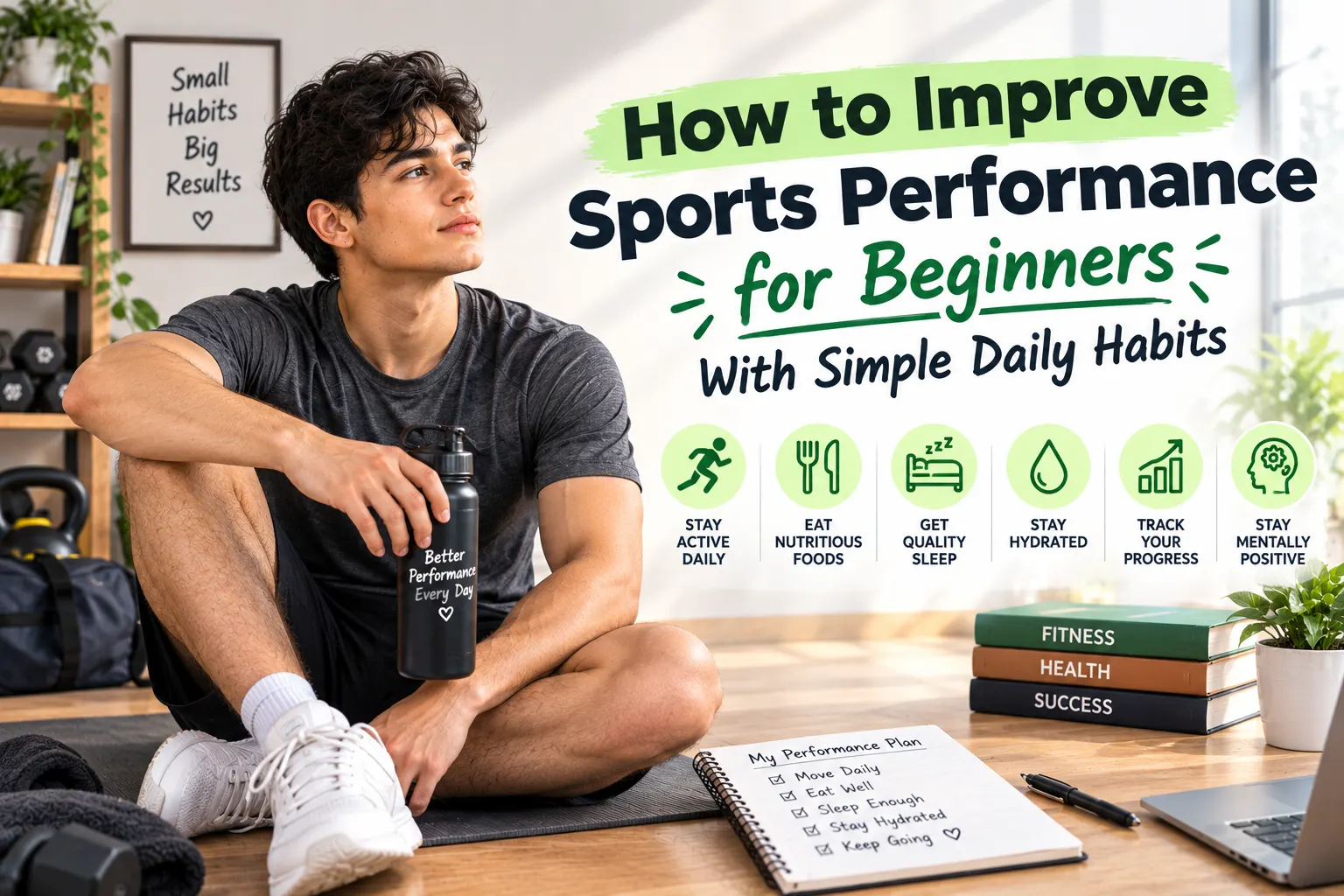
Improving sports performance does not require expensive equipment, intense workouts, or complicated training plans. Beginners can make meaningful progress by developing simple daily habits that support strength, endurance, coordination, and recovery.
Whether you play football, cricket, basketball, tennis, or another sport, consistency matters more than trying to do everything at once. The right combination of physical activity, balanced nutrition, quality sleep, and sport-specific practice can help you become a more confident and capable athlete.
If you are just starting, focus on small improvements you can maintain over time. Here are practical ways to improve sports performance through everyday habits.
1. Build a Consistent Exercise Routine
One of the most effective ways to improve sports performance is to follow a regular exercise routine. Consistent training helps your body adapt to physical demands and gradually improves fitness, movement control, and stamina.
Beginners should start with manageable sessions instead of exercising at maximum intensity every day. Depending on your sport and current fitness level, you might combine brisk walking, bodyweight exercises, light jogging, and basic movement drills throughout the week.
For example, a beginner could follow this simple schedule:
- Monday: Full-body strength training.
- Tuesday: Light cardio and mobility exercises.
- Wednesday: Sport-specific practice.
- Thursday: Rest or gentle walking.
- Friday: Strength and coordination training.
- Saturday: Recreational sports or skill practice.
- Sunday: Rest and recovery.
Adjust this schedule to your needs, experience, and sport. You do not need to train hard every day to improve.
The key is to establish a realistic routine that you can follow consistently without feeling exhausted or overwhelmed.
2. Improve Sports Endurance With Cardio Training
Sports endurance helps you maintain effort during physical activity. Whether you are running across a football field or playing a long tennis match, better cardiovascular fitness can make sustained movement feel more manageable.
Beginners can develop endurance through walking, cycling, swimming, jogging, or other activities they enjoy. Start at a comfortable pace and gradually increase the duration as your fitness improves.
A simple starting point is a 15–20-minute brisk walk several times per week. If you already tolerate that level of activity comfortably, gradually introduce short periods of jogging or faster movement.
How to Build Stamina Without Overtraining
You do not need to push yourself to exhaustion to improve stamina. Begin with moderate activity that allows you to speak in sentences, then increase your workload gradually.
For sports involving repeated bursts of speed, such as basketball or football, basic aerobic fitness provides a useful foundation. Later, you can add sport-specific intervals under an appropriate training plan.
Pay attention to persistent fatigue, declining performance, or unusual discomfort. These signs may indicate that you need more recovery or a less demanding routine.
3. Develop Strength and Power for Better Performance
Strength training supports many athletic movements, including jumping, accelerating, changing direction, and maintaining balance. Beginners can build a useful foundation with bodyweight exercises before progressing to heavier resistance.
Start with controlled movements that match your current abilities. Squats, glute bridges, wall push-ups, incline push-ups, and calf raises are practical options for training major muscle groups.
A basic beginner session might include:
- Bodyweight squats: 2 sets of 8–12 repetitions.
- Incline push-ups: 2 sets of 6–10 repetitions.
- Glute bridges: 2 sets of 10–12 repetitions.
- Calf raises: 2 sets of 12 repetitions.
- Plank: 2 short holds with good form.
Rest between sets and stop when your technique begins to deteriorate. The exact number of repetitions should depend on your current fitness level.
As exercises become easier, you can gradually increase repetitions, resistance, or difficulty. Avoid adding too much training volume at once.
Strength training does not have to make you bulky to be useful. Its purpose is to help you produce force, control your movements, and handle the physical demands of your chosen sport.
4. Eat Balanced Meals to Support Athletic Performance
Nutrition plays an important role in energy levels, training quality, and recovery. Beginners do not need an elaborate meal plan, but eating a balanced variety of foods can help support their exercise routine.
Carbohydrates provide an important fuel source for many forms of physical activity. Include foods such as oats, rice, potatoes, whole-grain bread, fruit, and other carbohydrate sources that suit your needs.
Protein helps repair and maintain muscle tissue. Eggs, yogurt, fish, chicken, beans, lentils, tofu, and other protein-rich foods can contribute to daily protein intake.
Healthy fats, vegetables, and fruit also help provide essential nutrients. Try to build meals around a combination of protein, carbohydrates, and produce rather than relying on one food group.
Stay Hydrated Before, During, and After Exercise
Dehydration can affect comfort and physical performance, especially during exercise in hot weather. Drink water regularly throughout the day and pay attention to thirst, sweating, and the duration of your training sessions.
Long or intense exercise sessions may require additional attention to fluid and electrolyte replacement. Individual needs vary depending on body size, temperature, activity level, and sweat loss.
Avoid experimenting with unfamiliar supplements simply because other athletes use them. A consistent diet, appropriate hydration, and adequate recovery are better starting points for beginners.
5. Prioritize Sleep and Muscle Recovery
Training challenges your body, while recovery allows it to adapt. Without enough rest, you may experience persistent soreness, low energy, reduced concentration, and difficulty maintaining training quality.
Most adults need around seven to nine hours of sleep per night, although individual needs vary. Younger athletes generally require more sleep, depending on their age.
Establish a consistent bedtime, limit stimulating activities before sleep, and create a comfortable sleeping environment. These habits can help you feel more prepared for your next training session.
Recovery also involves managing exercise intensity. Alternate demanding sessions with lighter activities or rest days when appropriate.
Gentle walking and comfortable mobility work can help you stay active on easier days, but they should not replace rest when you are genuinely fatigued.
If pain persists, worsens, or interferes with normal movement, stop the aggravating activity and seek advice from a qualified healthcare professional.
6. Practice Sport-Specific Skills and Coordination
General fitness is valuable, but athletic performance also depends on skills specific to your sport. A strong runner, for example, needs different technical abilities from a tennis player or cricket batter.
Spend part of your training session practicing movements you regularly use in competition. Football players might work on passing and ball control, while basketball beginners can practice dribbling, shooting technique, and controlled changes of direction.
Coordination exercises can also help you become more comfortable with movement. Simple activities such as balancing on one leg, controlled lateral steps, and catching a ball can be adapted to your experience level.
Quality matters more than rushing through repetitions. Practice slowly enough to maintain control, then increase speed as your technique improves.
Whenever possible, ask a qualified coach to review your technique. Small adjustments can help you practice more effectively and reduce avoidable mistakes.
7. Set Realistic Goals and Track Your Progress
Clear goals help turn exercise into a repeatable habit. Instead of focusing only on winning games or becoming an elite athlete, choose smaller targets you can influence directly.
For example, you could aim to practice a skill three times per week, complete two strength sessions, or improve the duration of a comfortable jog.
Keep a simple training log that records:
- Exercise sessions completed.
- Training duration and perceived effort.
- Skills practiced.
- Sleep quality and energy levels.
- Changes in performance over time.
Review your progress every few weeks rather than judging results after a single workout. Improvement may appear as better technique, less fatigue during familiar activities, or greater confidence on the field.
Avoid comparing your progress with athletes who have different experience levels, resources, or training histories. Your own consistency and gradual development provide more useful measures of success.
8. Develop Mental Focus and Pre-Game Confidence
Sports performance involves more than physical fitness. Concentration, emotional control, and confidence can influence how you respond to challenges during practice and competition.
Beginners can develop mental focus by setting one or two clear intentions before each session. You might focus on maintaining good technique, communicating with teammates, or staying composed after making a mistake.
Simple breathing exercises can help you settle your attention before a game. Take a few slow, comfortable breaths and direct your attention toward the next action rather than worrying about the final result.
Mistakes are part of learning a sport. Instead of treating every error as a failure, identify what you can adjust and use the next repetition as an opportunity to improve.
Building confidence takes time. Consistent preparation and realistic expectations help make the process more manageable.
9. Avoid Common Beginner Training Mistakes
Many beginners struggle because they try to improve too quickly. Doing intense workouts every day, skipping meals, neglecting sleep, or copying advanced athletes can make a routine difficult to sustain.
Increase training volume gradually and include recovery time. Choose exercises that match your current abilities rather than forcing movements that cause pain or require poor technique.
Another common mistake is changing routines too frequently. Give a sensible training plan enough time to become familiar with it before making major adjustments.
Remember that soreness is not proof of a successful workout, and exhaustion is not the goal of every session. Sustainable progress comes from balancing appropriate effort with adequate recovery.
If you have an existing medical condition, a significant injury, or concerns about starting exercise, consult a qualified healthcare professional for individualized guidance.
Small Daily Habits Can Improve Sports Performance Over Time
Improving sports performance as a beginner starts with manageable actions repeated consistently. Regular exercise, balanced meals, sufficient sleep, sport-specific practice, and realistic goal setting all contribute to a stronger foundation.
You do not need to master every habit immediately. Choose two or three changes you can maintain this week, track how you feel, and build from there.
With patience and consistent practice, you can develop better fitness, improve your skills, and become more confident in your chosen sport.
Frequently Asked Questions
1. How can beginners improve sports performance quickly?
Beginners can build a strong foundation by following a consistent training schedule, practicing sport-specific skills, eating balanced meals, staying hydrated, and getting enough sleep. Focus on gradual improvements rather than expecting immediate results. The pace of progress depends on your starting fitness level, sport, training quality, recovery, and individual circumstances.
2. How many days a week should a beginner train for sports?
Many beginners can start with three to five days of planned physical activity per week, depending on intensity, experience, and recovery needs. Not every session should be demanding. Combine strength training, cardiovascular exercise, and skill practice with easier days or rest days to avoid excessive fatigue.
3. What should I eat to improve athletic performance?
Eat balanced meals that provide carbohydrates for energy, protein for muscle repair, and healthy fats for overall health. Include fruits, vegetables, and enough fluids throughout the day. Your exact needs depend on your sport, training volume, body size, and health status, so more demanding training may require individualized nutrition guidance.
4. Does sleep affect sports performance?
Yes. Sleep supports physical recovery, concentration, learning, and the ability to perform consistently during training. Insufficient sleep can make exercise feel harder and affect coordination and decision-making. Most adults should aim for seven to nine hours nightly, while younger athletes typically need more depending on their age.
5. Can I improve sports performance without going to a gym?
Yes. You can improve general fitness at home or outdoors with bodyweight exercises, walking, running, balance drills, and sport-specific practice. Squats, incline push-ups, glute bridges, and planks can help develop basic strength. Choose exercises appropriate for your fitness level and gradually increase difficulty as your technique and capacity improve.